Sehr Gut, in German
I did my master's in Strategic Design at HfG Schwäbisch Gmünd. The programme sits where design, management and research meet — less about making one object well, more about framing the right problem, studying the people it touches, and arguing for what to build at all.
The class was mixed on purpose. I came from industrial design; others came from communication, interaction and fine art. Every project was a team, so every idea had to survive being explained to someone who saw the world differently. That is where I learned to research before designing, to test while things were still rough, and to carry a project from a loose question all the way to a business case.
Fun fact: the whole class was taught in German — I graduated with sehr gut, the top grade.
Graduation project — AI&U
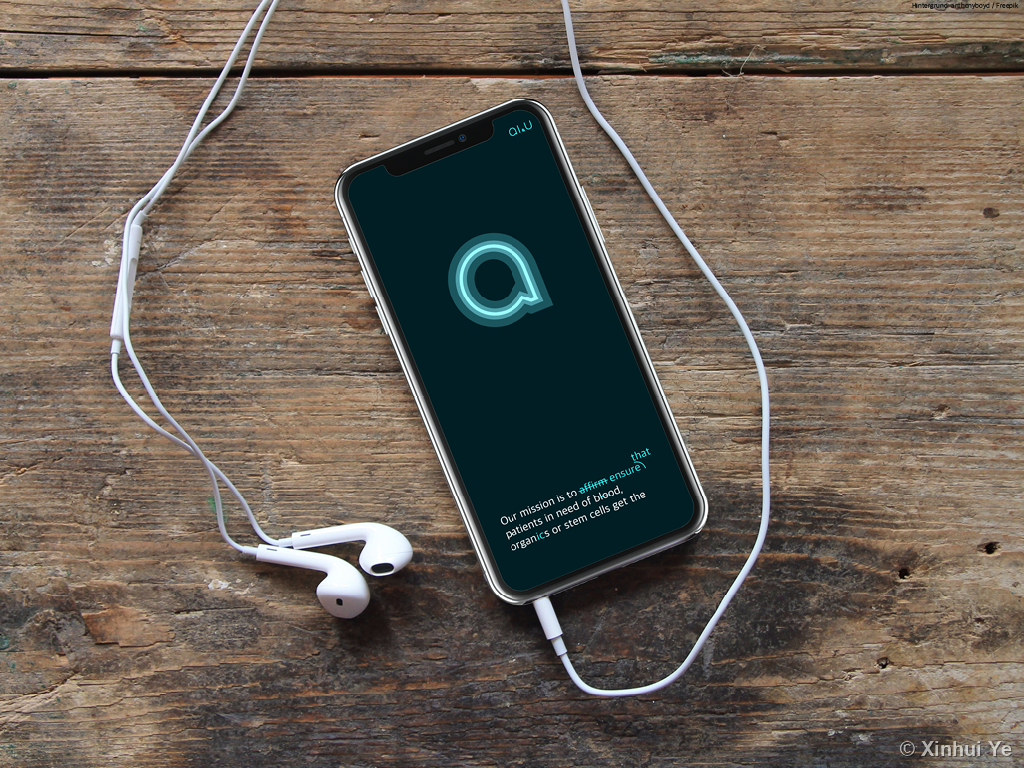
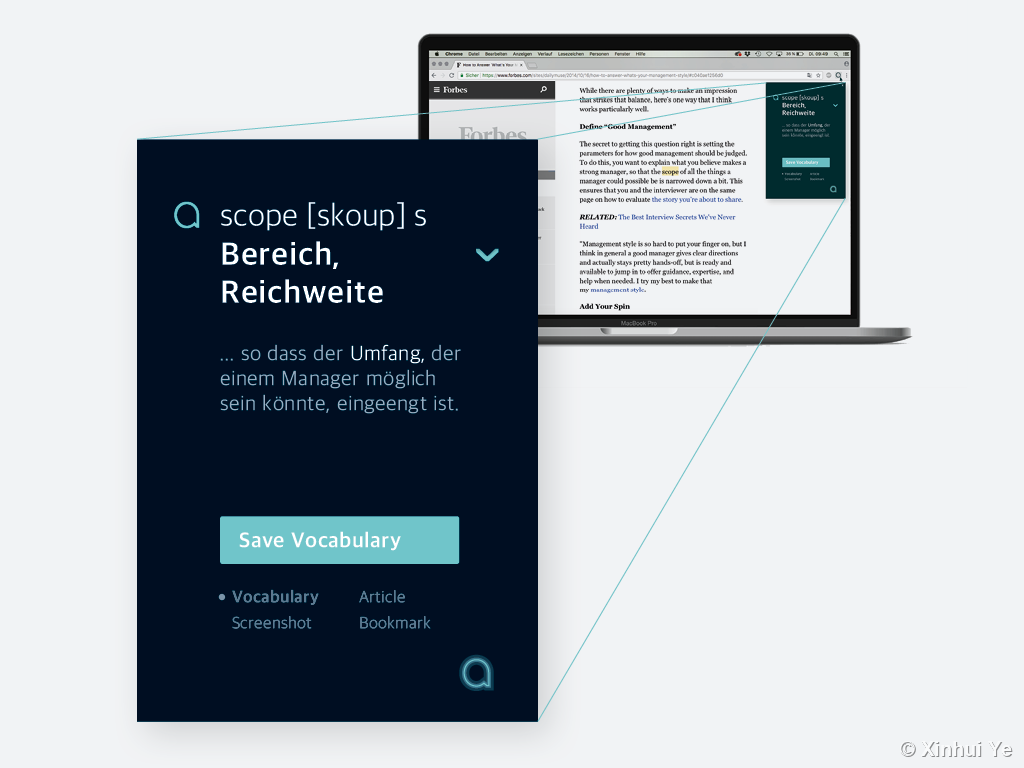
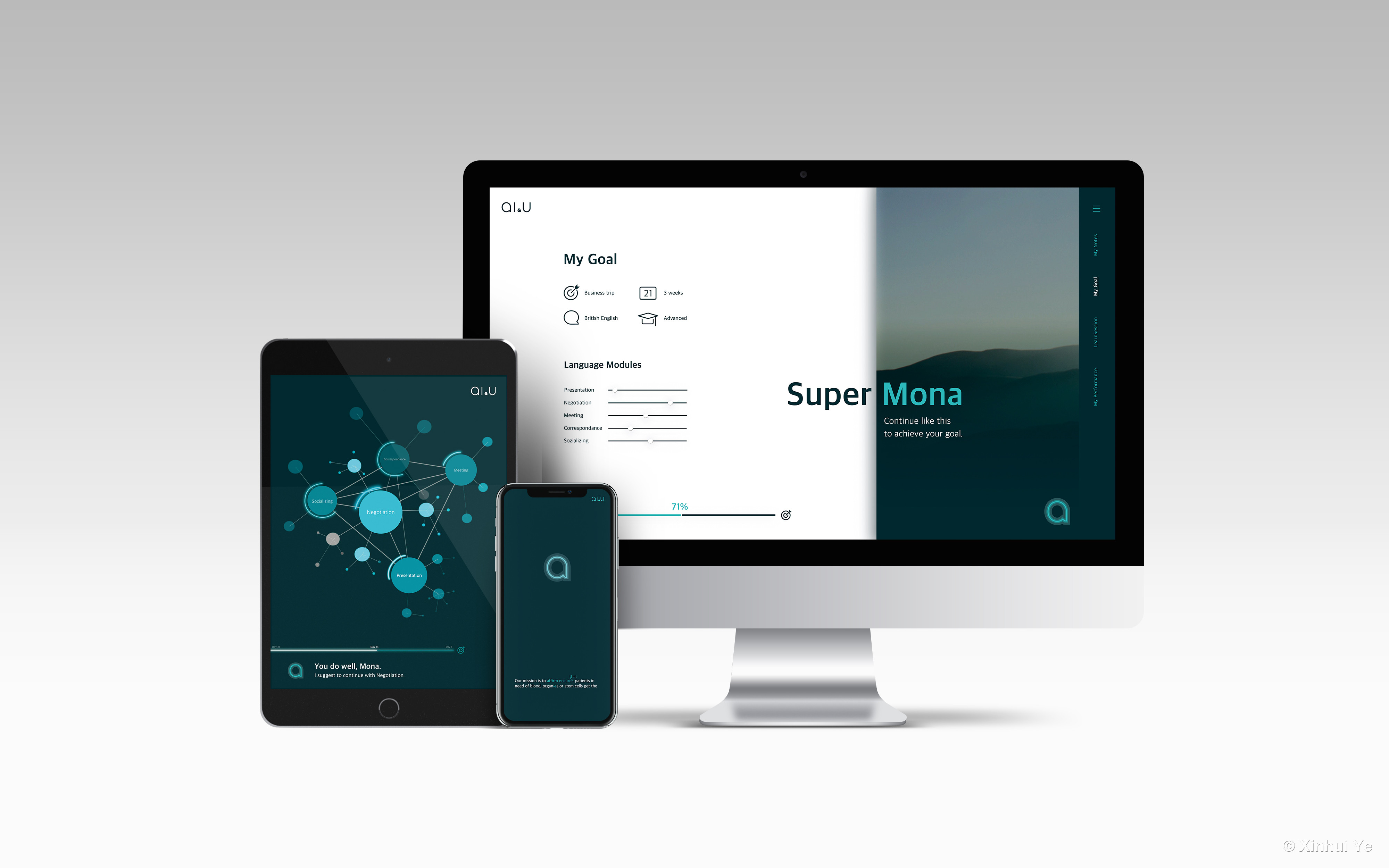
My thesis was AI&U, a concept for a language learning platform that adapts to whoever is using it. Most tools teach everyone the same way. AI&U works the other way around. It learns who you are first, your level, your goals, when you tend to focus, even your mood, and builds the lessons from there.
I made it over five months with Chiara Mayer. The idea came from engineering, where a machine gets a live model of itself, and we wondered if a learner could have one too. But the theory was the small part. Most of the time went into talking to people, building rough versions, and seeing what fell apart.
We also made a few short films. Rather than list what the platform does, we put it into everyday situations, a commute, a work call to prep for, so the idea felt like something you would actually use.

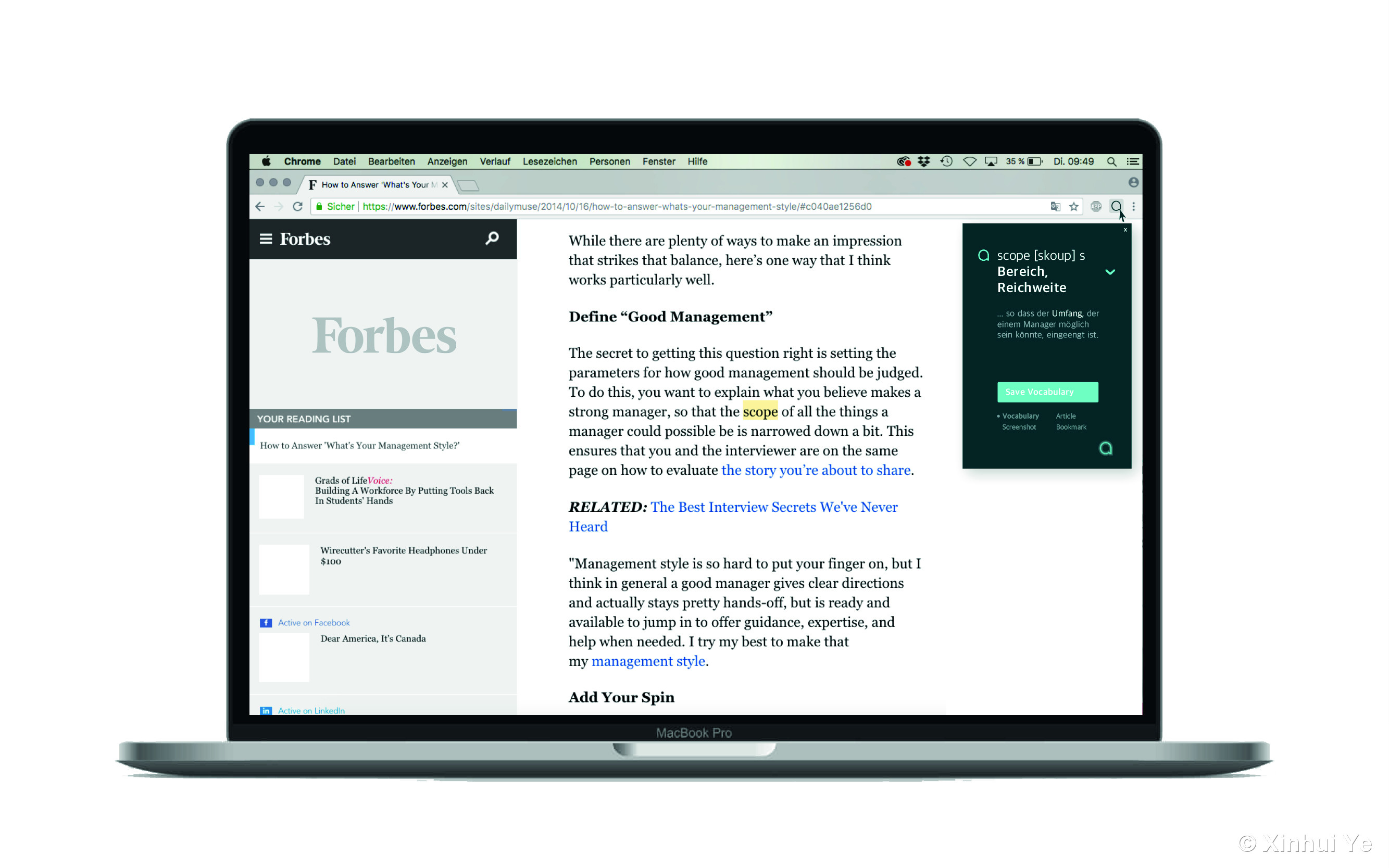
Behind the concept.
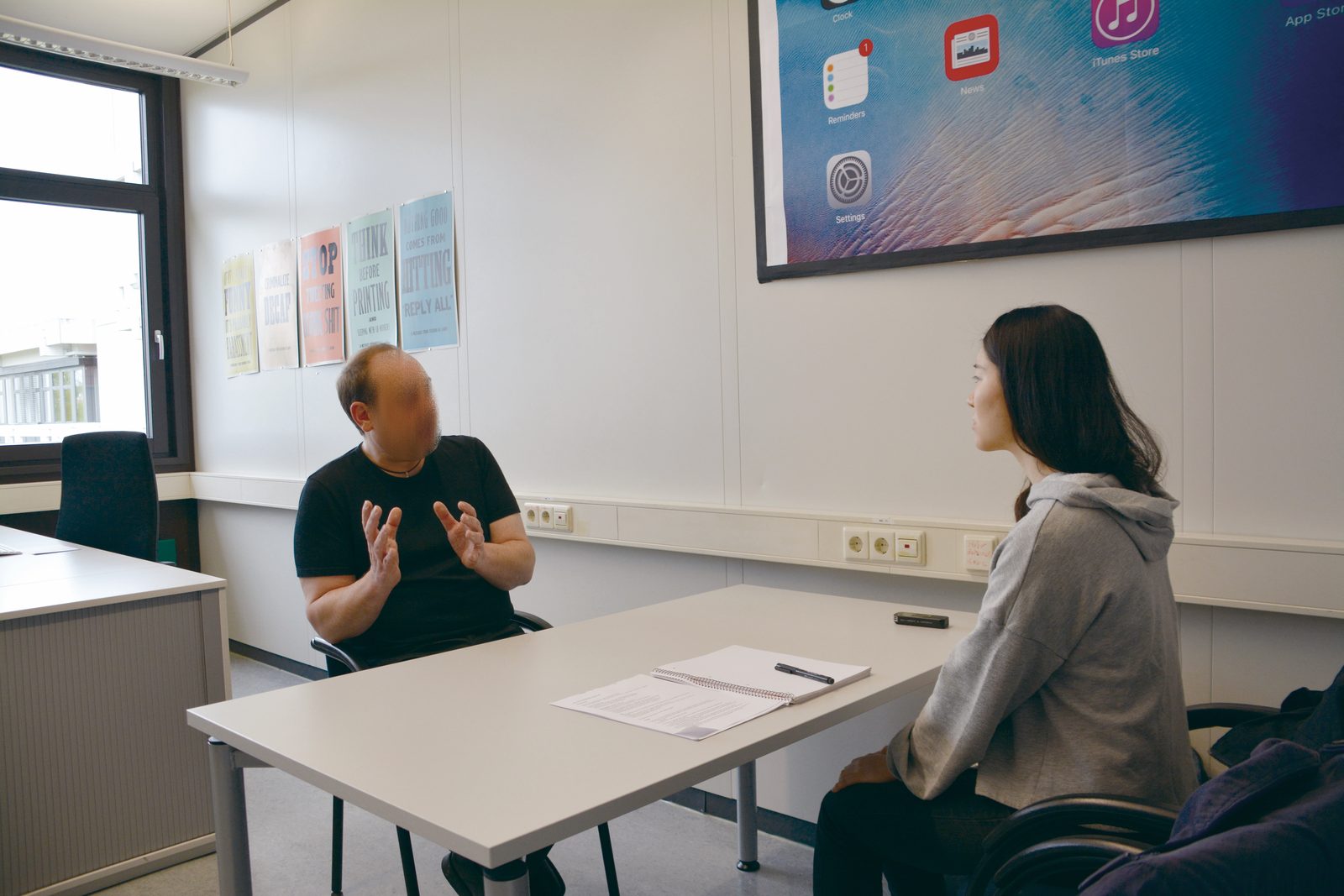
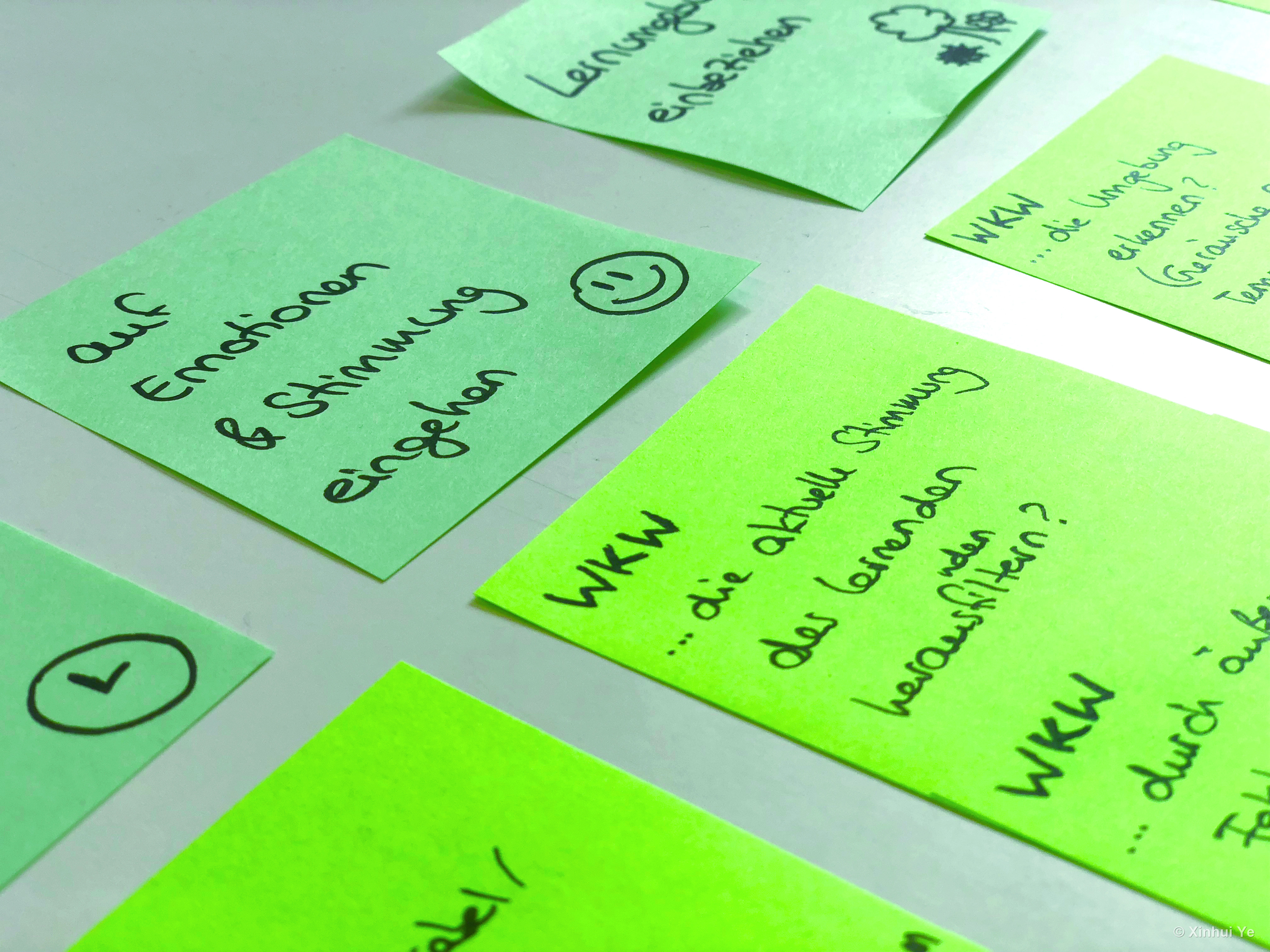
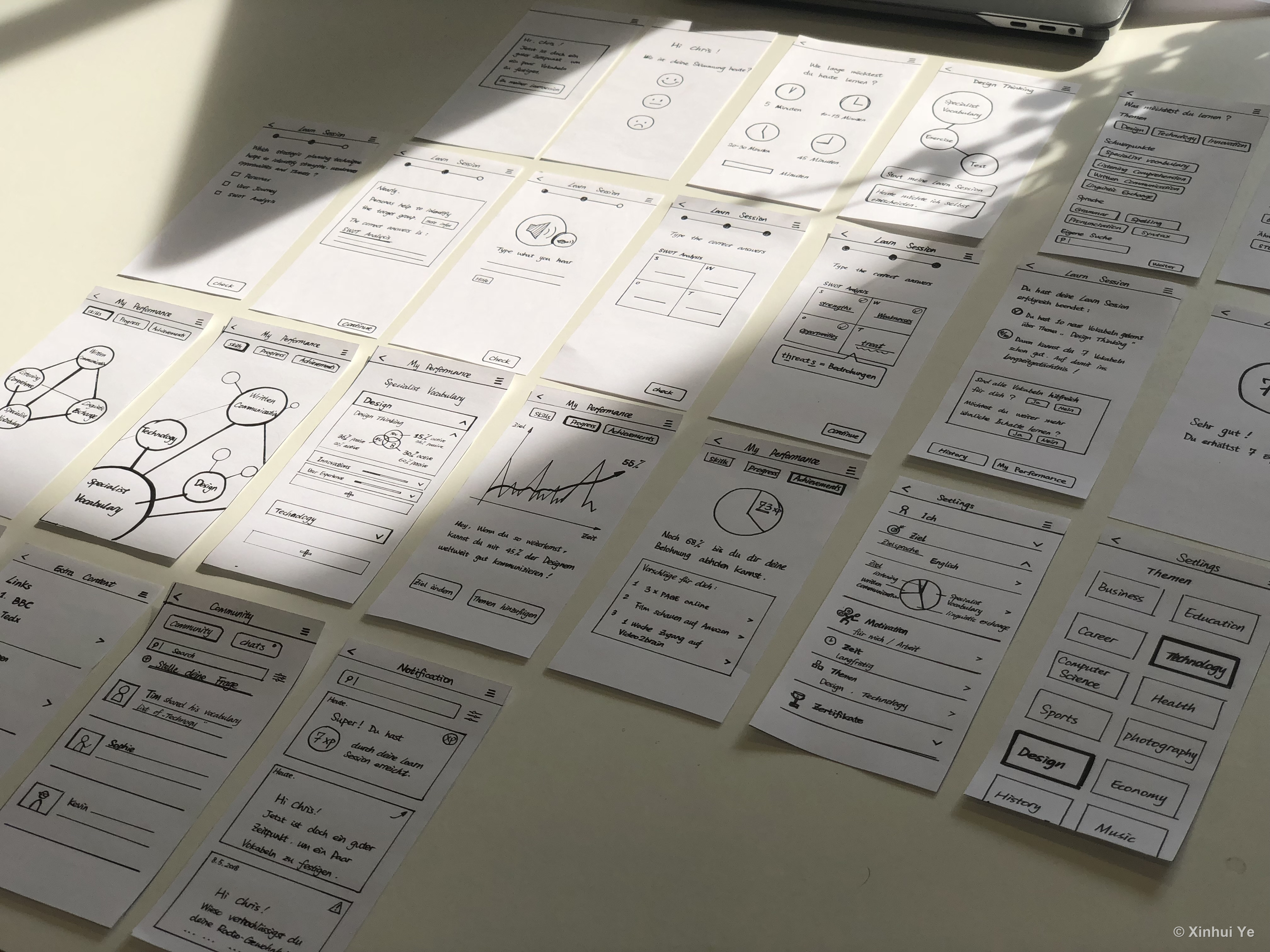
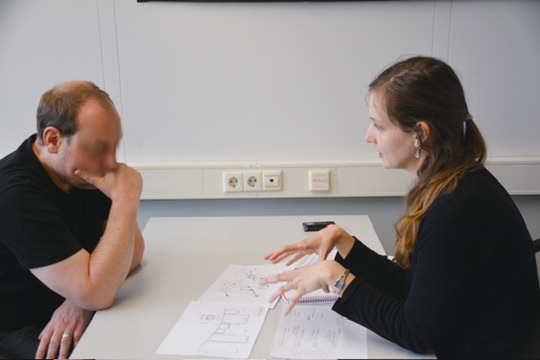
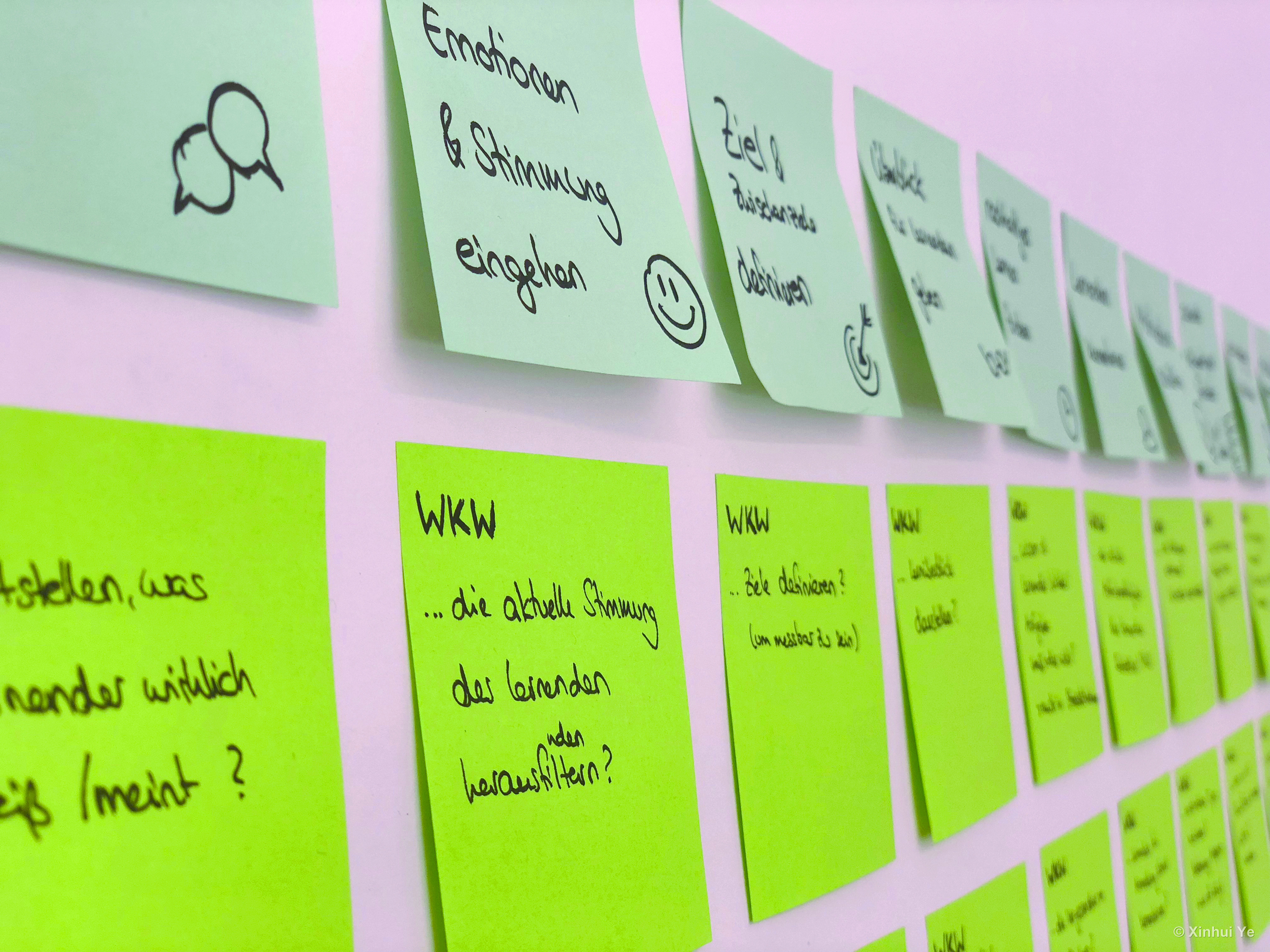
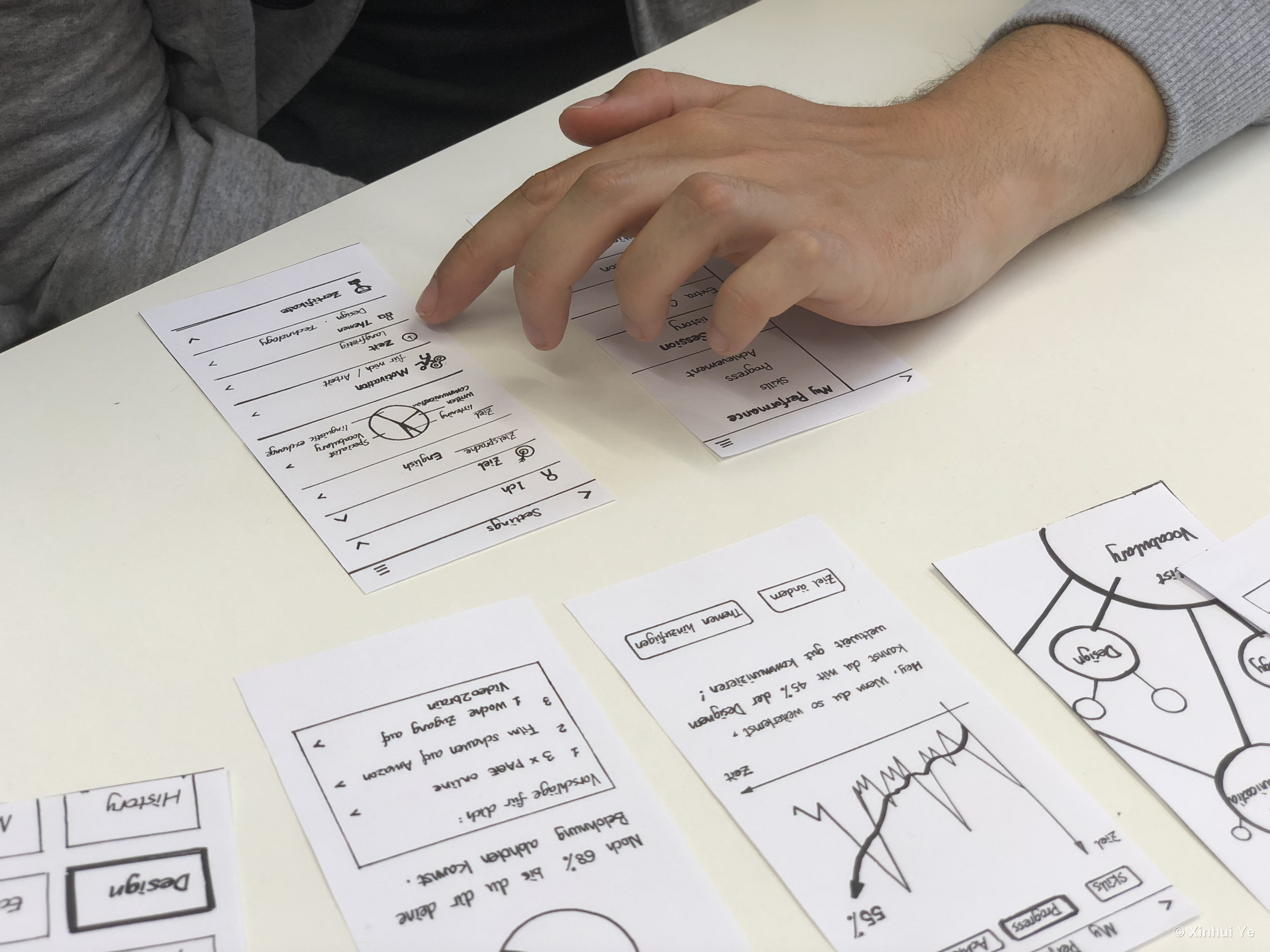
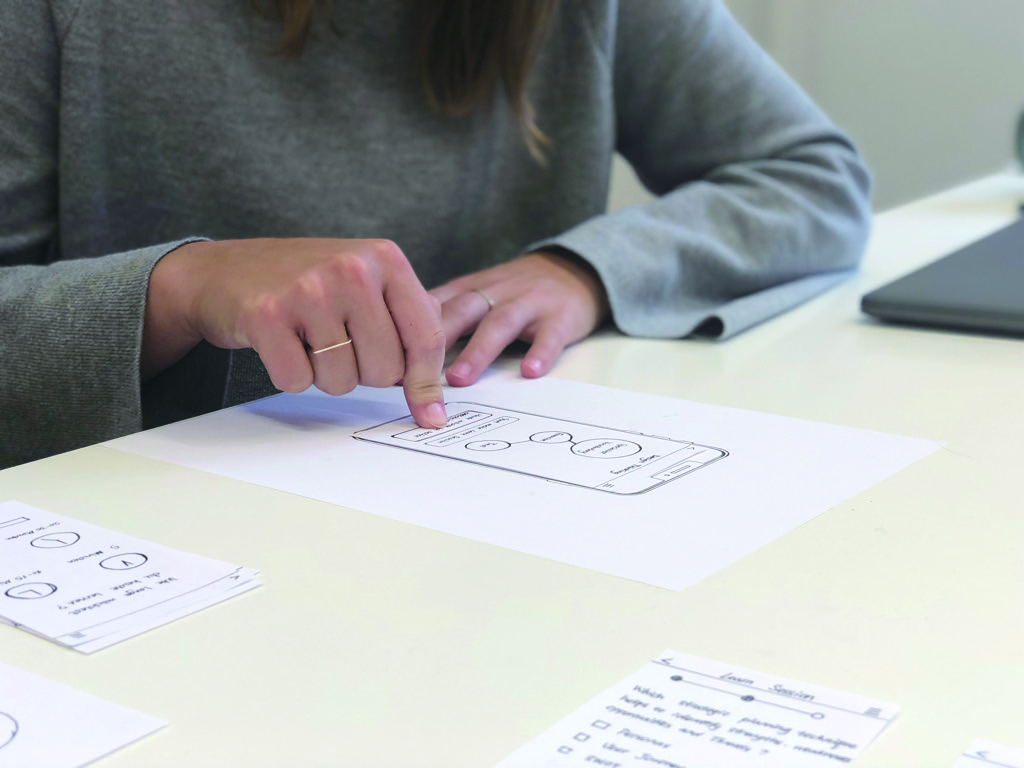
Behind the films sat five months of fieldwork. Before designing anything, we interviewed the people who knew the territory — language teachers, online-learning researchers, an engineer who builds digital twins for factories, an AI researcher at the German Research Center for Artificial Intelligence — and each conversation took a wrong assumption off the table. We kept ideas cheap: flowcharts, cut-paper screens and a mocked-up click path we could throw away without regret. Then we put the rough version in front of real learners and stopped talking — watching someone hesitate over a screen says more than asking what they think, and we rebuilt whatever made people pause for the wrong reasons.
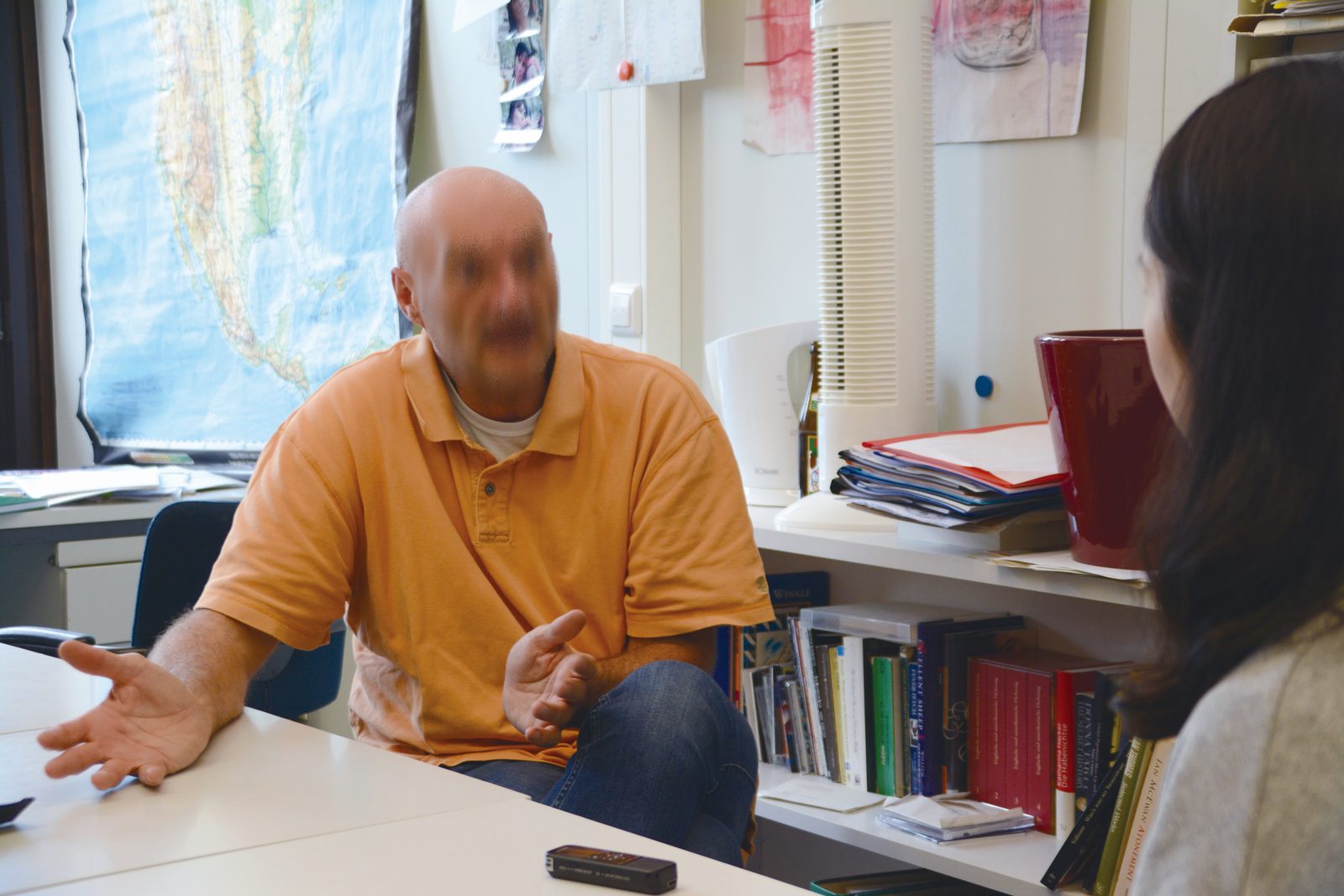
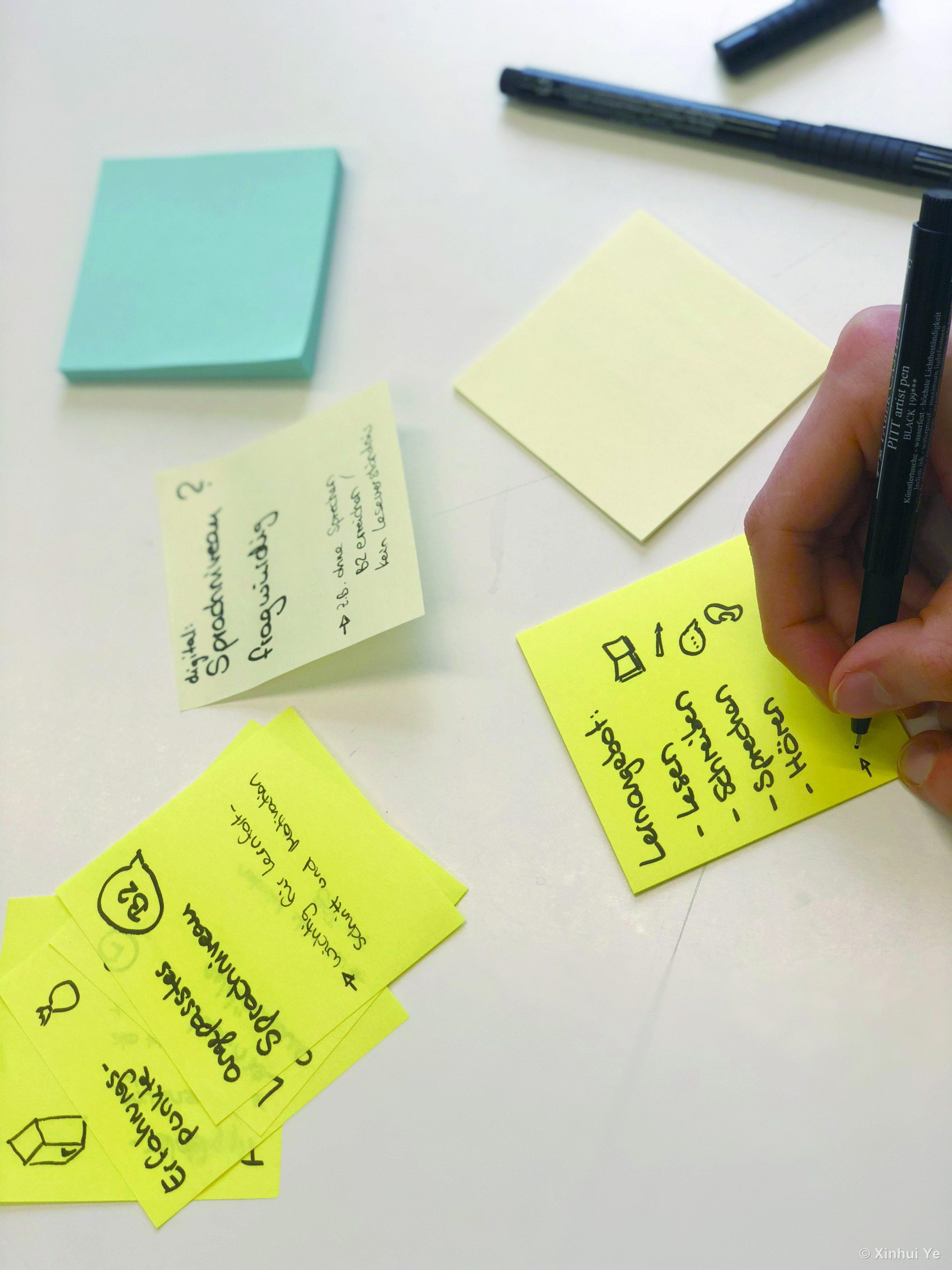
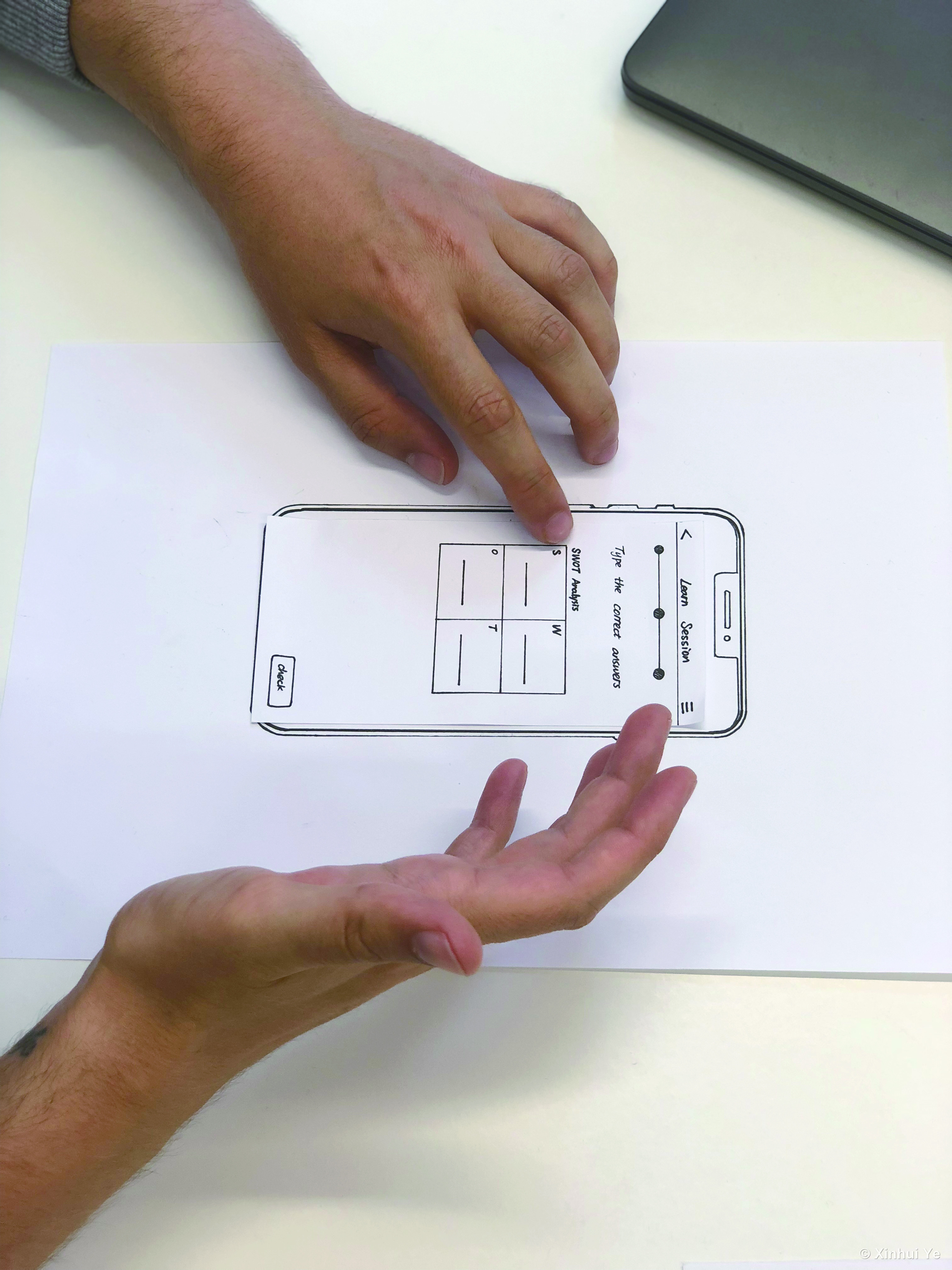
Demo day.
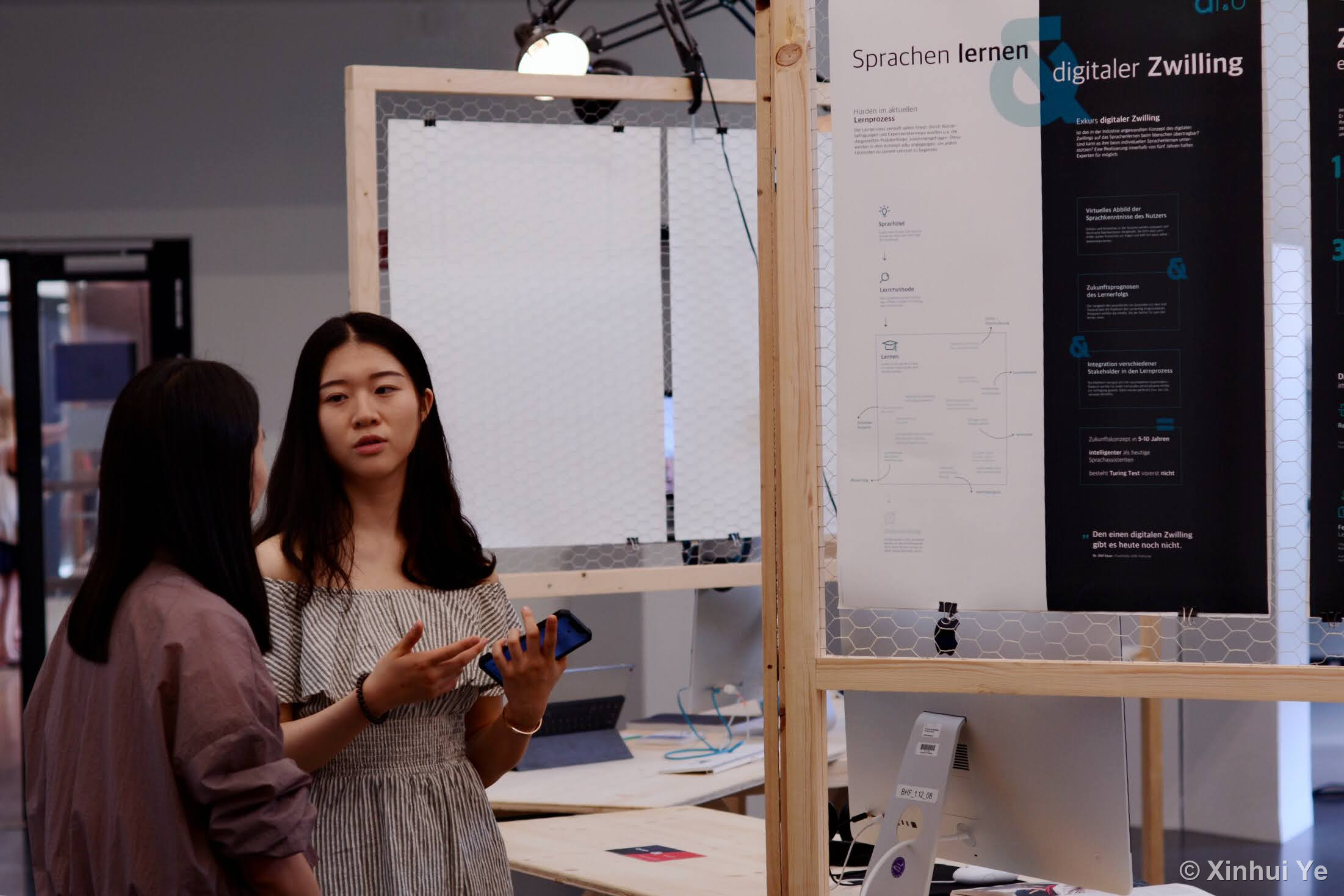
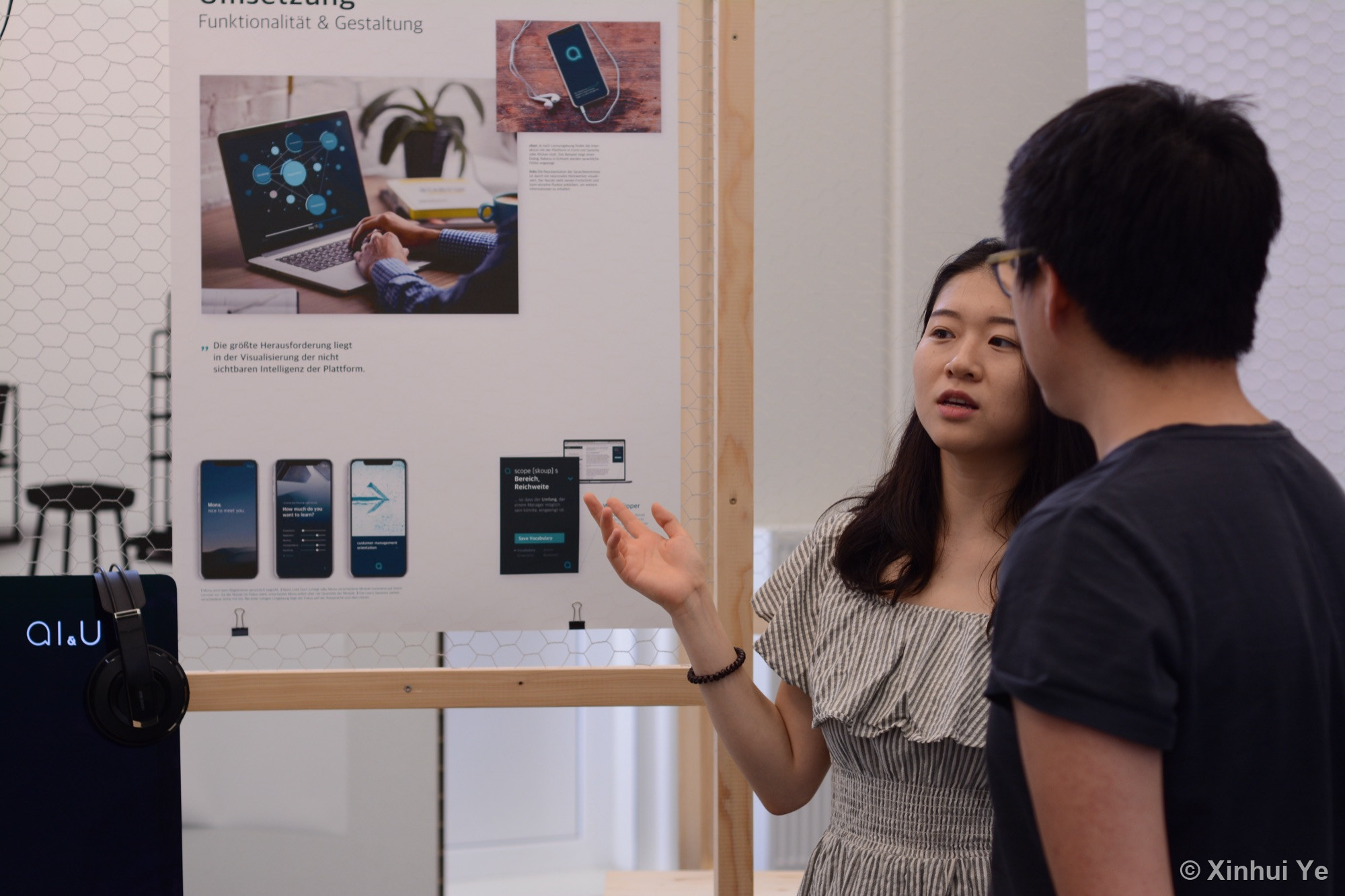
After the defense came demo day. We set up our stand and stood with it for two days, showing the work to whoever stopped by. People came from design studios, companies, and other colleges, and explaining the project again and again to strangers turned out to be its own kind of test.
The whole master was a deep dive into a different culture and a different way of studying. I came out of it having learned a lot, and not only about my field. Working in a team, across cultures and disciplines, with people who each saw design their own way, taught me as much as the projects did. That is the part I still carry into how I work.