Defense Day
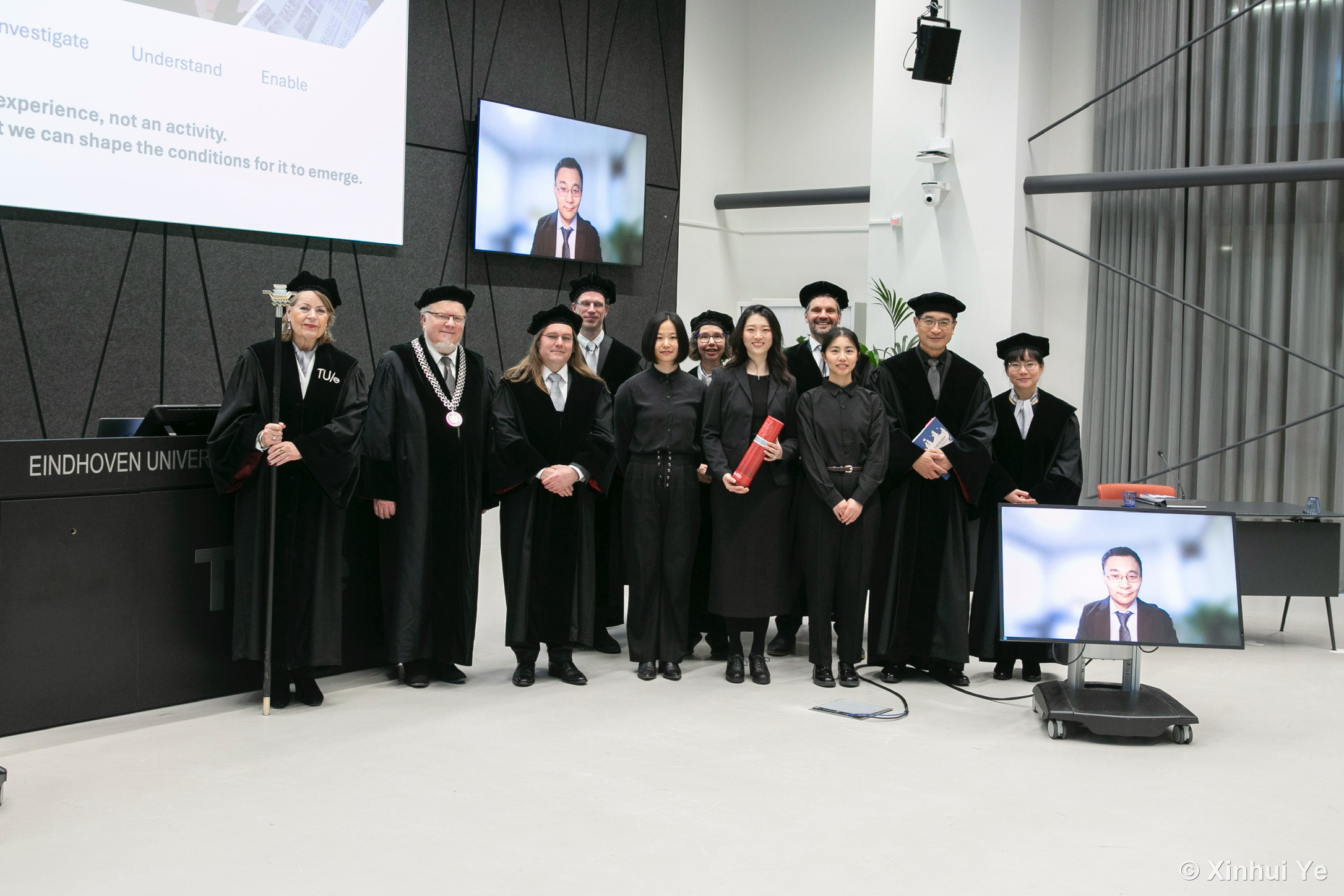
14 January 2026 · Room 0.710, Atlas Building, TU/e
I had imagined this day so many times that when it actually arrived, it felt slightly unreal. The Rector Magnificus entered carrying a mace, leading eight committee members in full academic gowns. I saw the togas and felt a wave of nerves I had not expected.
The work I was about to defend started with a simple frustration. When design teams go remote, something disappears that is very hard to name. Not the meetings, not the tools, not even the communication exactly. It is the quality of exploring together. Fifteen minutes to present, then a 45-minute defense. Then "Hora Est" from the Rector, and the committee filed out. My paranymphs were right there. Then the applause started.
The reception was at Hubble, and I was so grateful to celebrate with the committee, my family, colleagues, and friends. People call the PhD a lonely journey. I was fortunate to have someone at every turn. That day held more emotions than I knew what to do with: nerves, excitement, relief, joy, and at the very end, a small quiet wonder about what comes next.
 Book details
- Introduction
- Visions and Real-World Experiences
- Limitations of Current Tools
- Understanding and Defining Co-Exploration
- Guidelines for Improving Remote Co-Exploration
- Conclusion and Reflection
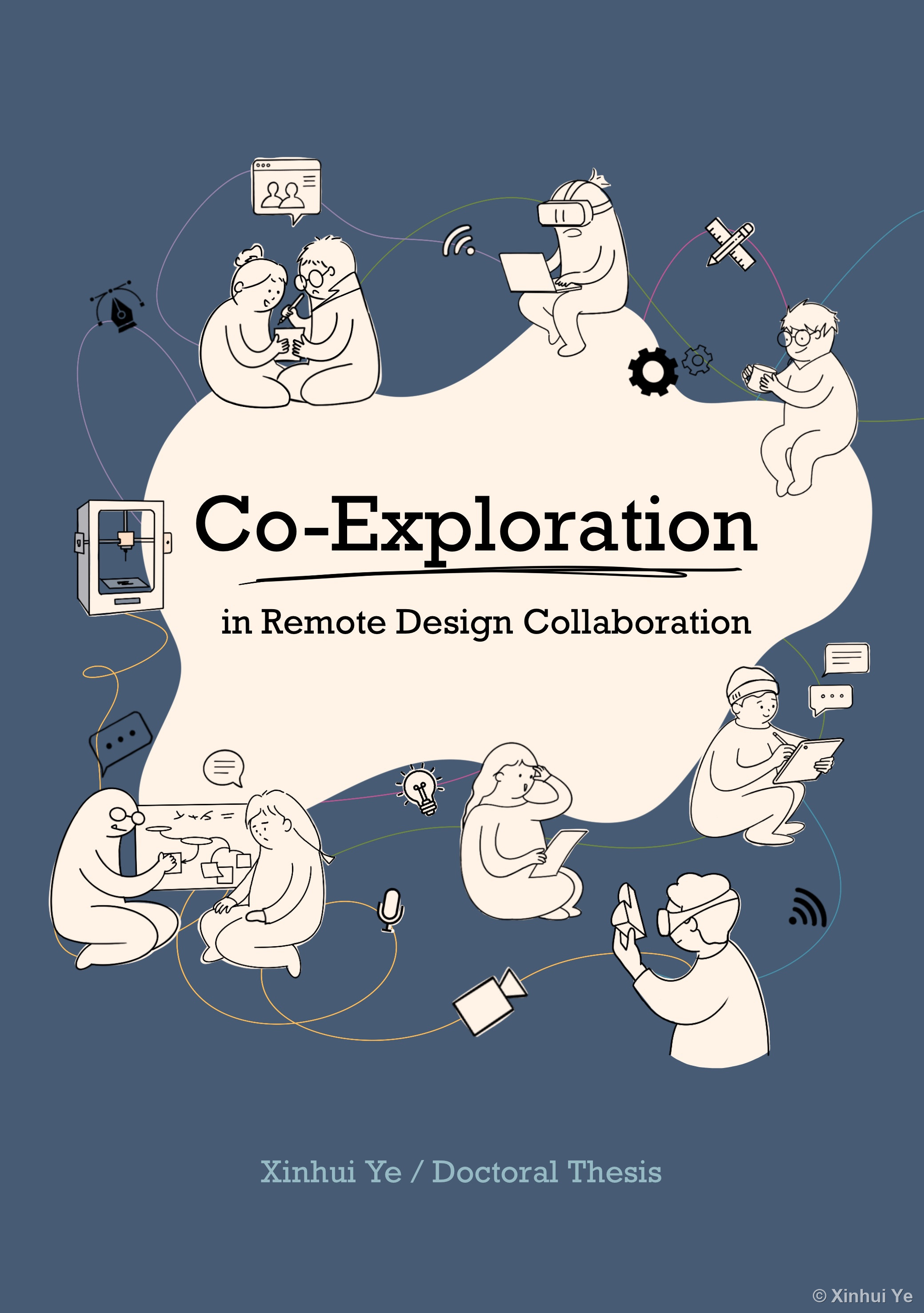
The thesis book.
The book pulls together four studies into one argument: that supporting collaborative design is less about any one tool and more about creating the right conditions for co-exploration to happen. I designed the cover and illustrated all of its content myself.
This dissertation investigates co-exploration, an emergent, situated experience that unfolds within design teams during collaboration. Co-exploration is best understood not as a prescribed activity, but as an emergent shared experience that arises from the quality of team interaction. Its principal value lies in transforming individual knowledge into collective intelligence, enabling teams to achieve outcomes beyond the sum of their individual contributions.
"Valuable, hard-to-express knowledge is lost, such as material feel, rhythm of actions, or the pace at which ideas build on each other. Ye's research explores exactly that gap: how do you support co-exploration when not everyone is at the same table?"
"I have read your dissertation with much pleasure and interest. It is very well written and well structured."
"This dissertation demonstrates strong empirical work and makes valuable contributions through the longitudinal study and analytical framework, providing solid evidence about co-exploration patterns in remote design collaboration."
"This is a very comprehensive piece of work with good quality output."
"This knowledge is very relevant for other designers and researchers interested in studying and designing for remote design collaboration."
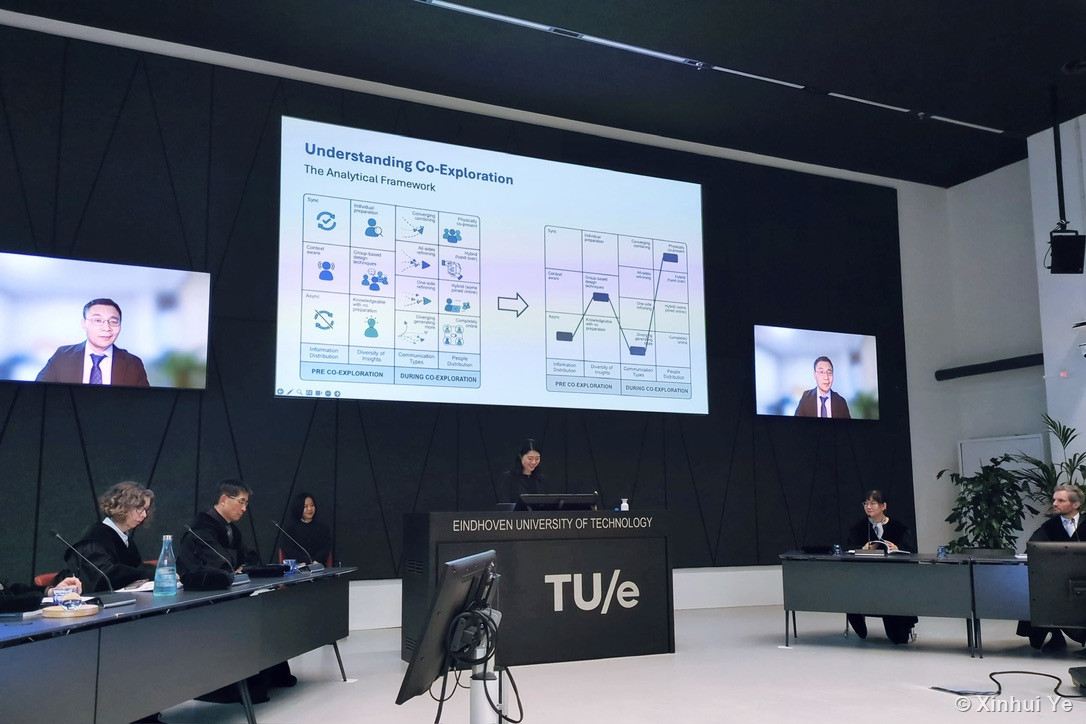
The analytical framework.
The slide I was most nervous about and most proud of. Five months of data collection, much longer to make sense of. It maps how co-exploration unfolds across activities — not what teams are doing, but how they are doing it together.
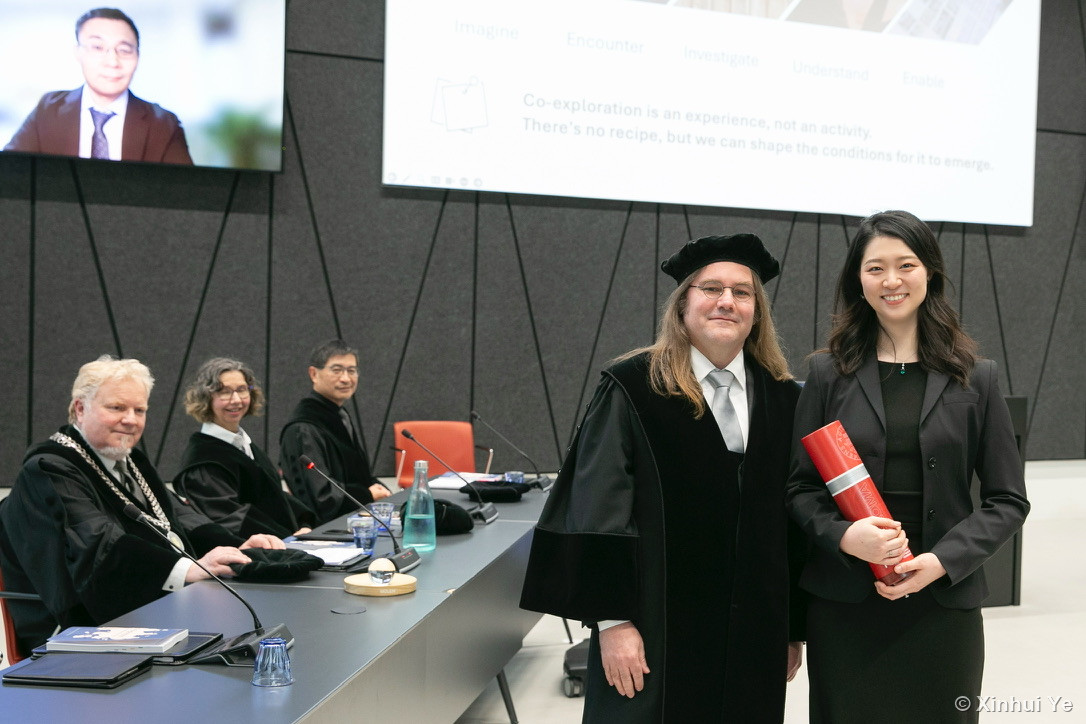
Handing over the diploma.
Joep stood close enough that I felt safe to try, and far enough back that I had to grow. I cannot imagine doing this without him.
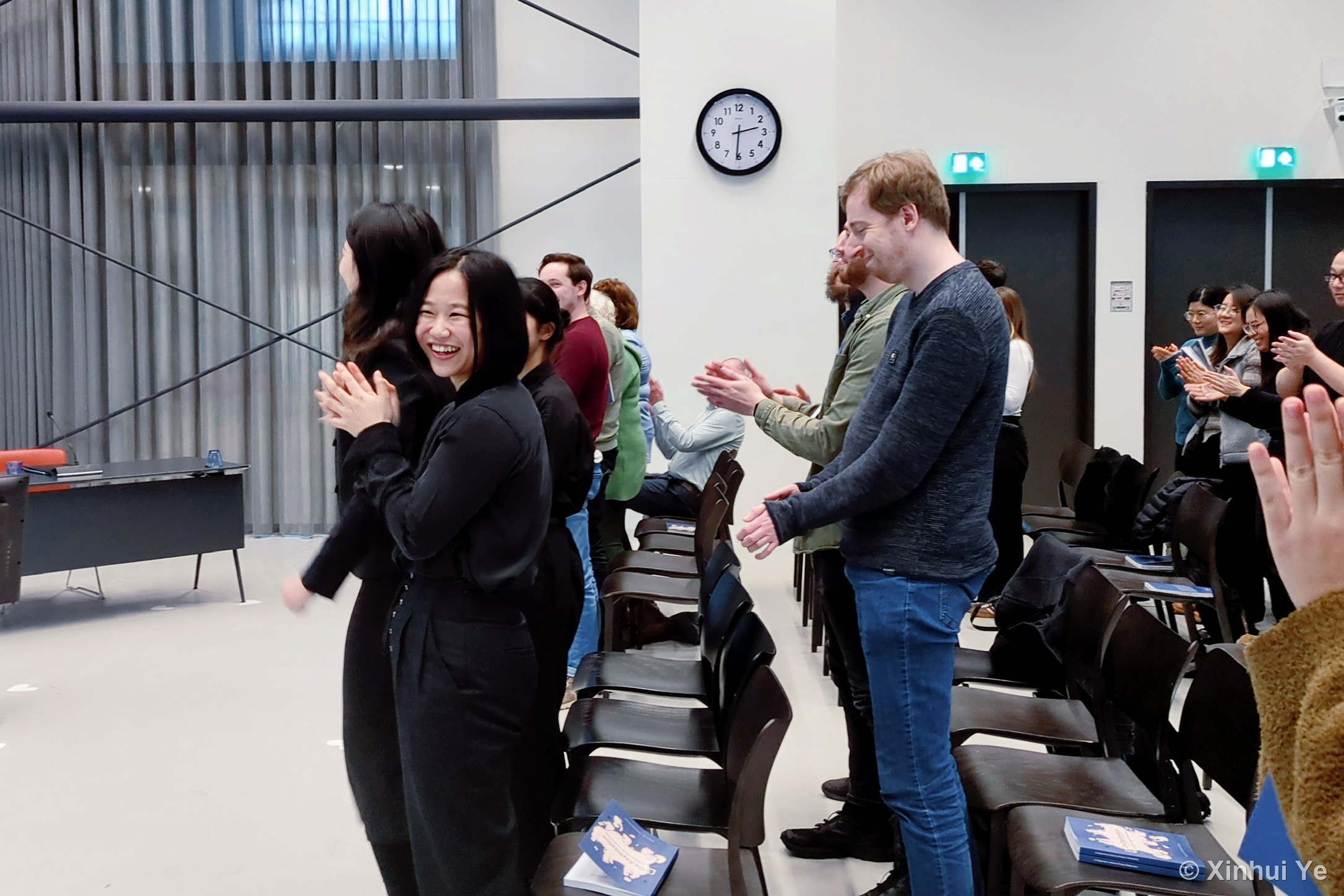
Relief.
And applause.
I had been so focused on the defense that I forgot about the part where people clap. The relief was physical, the kind that moves through you slowly.
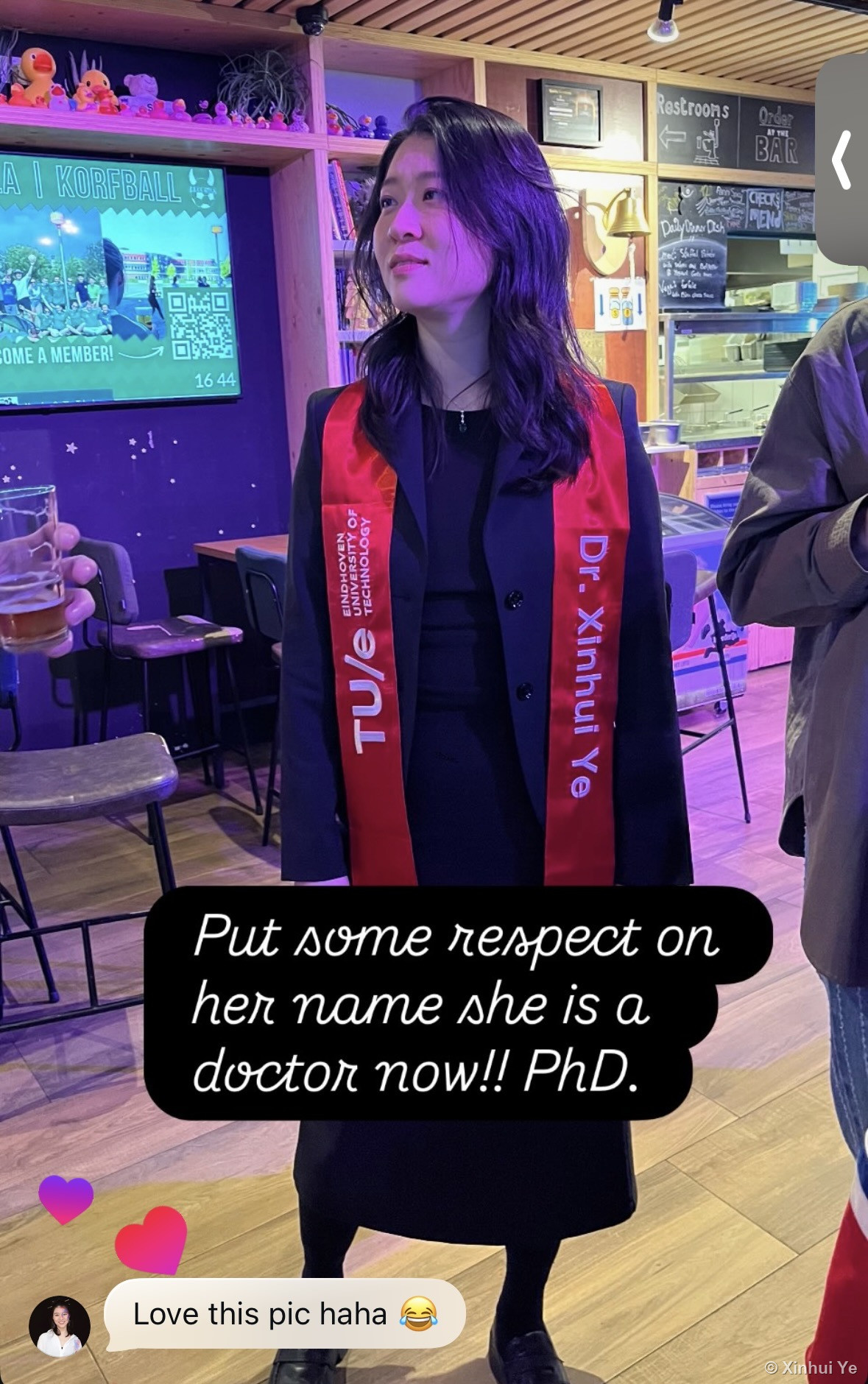
The reception at Hubble.
A friend made me a custom sash. Another caught this photo. I keep it because of the look on my face — confident and confused at the same time. Very me at that particular moment.