Exploration sits at the heart of design. When a team explores together rather than alone, that shared process becomes something distinct, something I call co exploration. It shows up everywhere, in brainstorms, sketching, building on someone else's half formed idea, the quick aside that sends two people down a new path. Yet for something so common, it had never really been pinned down. Most accounts treat exploration as a solo act, or fold the collaborative version into a single early phase and leave it there. Earlier work touched it only in pieces, tied to the early divergent stages, and rarely followed it past the first burst of ideas. How co exploration actually unfolds across a whole design process, week after week, in real teams working under real constraints, was the gap this study set out to address.
I wanted to understand what co-exploration actually is. Three questions guided the work:
1. What exactly counts as co-exploration?
2. How can it be characterized within a collaborative design process?
3. What value does it bring to a team?
Answering these meant following real teams closely enough, and for long enough, to see the pattern beneath the activity.
The weekly diary entry
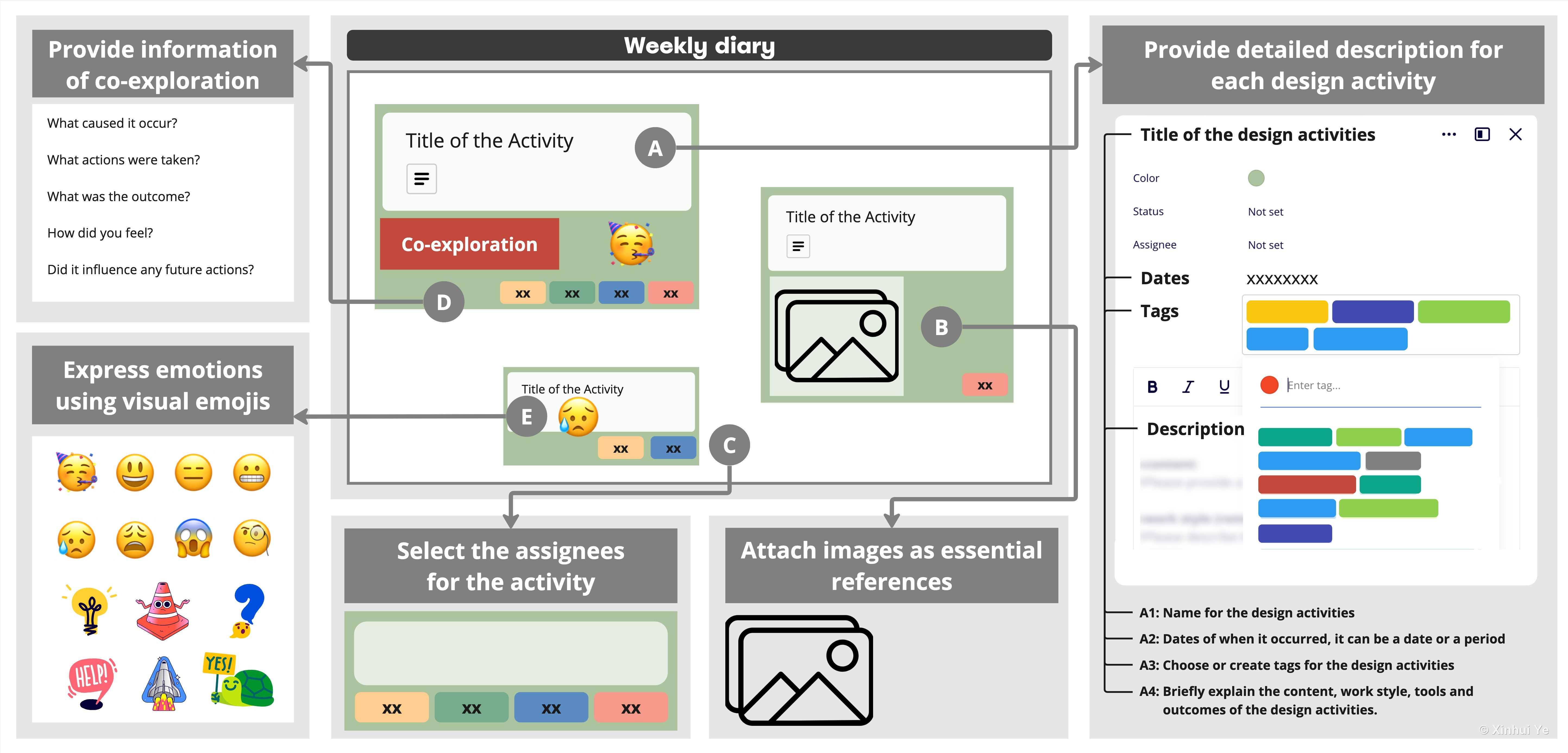
Each week, every team filled in a shared diary documenting what they had done, then sat down with me for a short interview where they walked me through it. This is the schema of a weekly diary entry. Participants (A) provided a detailed description of each design activity, (B) attached images as references for later discussions, (C) selected assignees for each activity, (D) identified activities as co-exploration and explained their reasoning, and (E) expressed their emotions using emojis for insights beyond text descriptions.
A continuous board
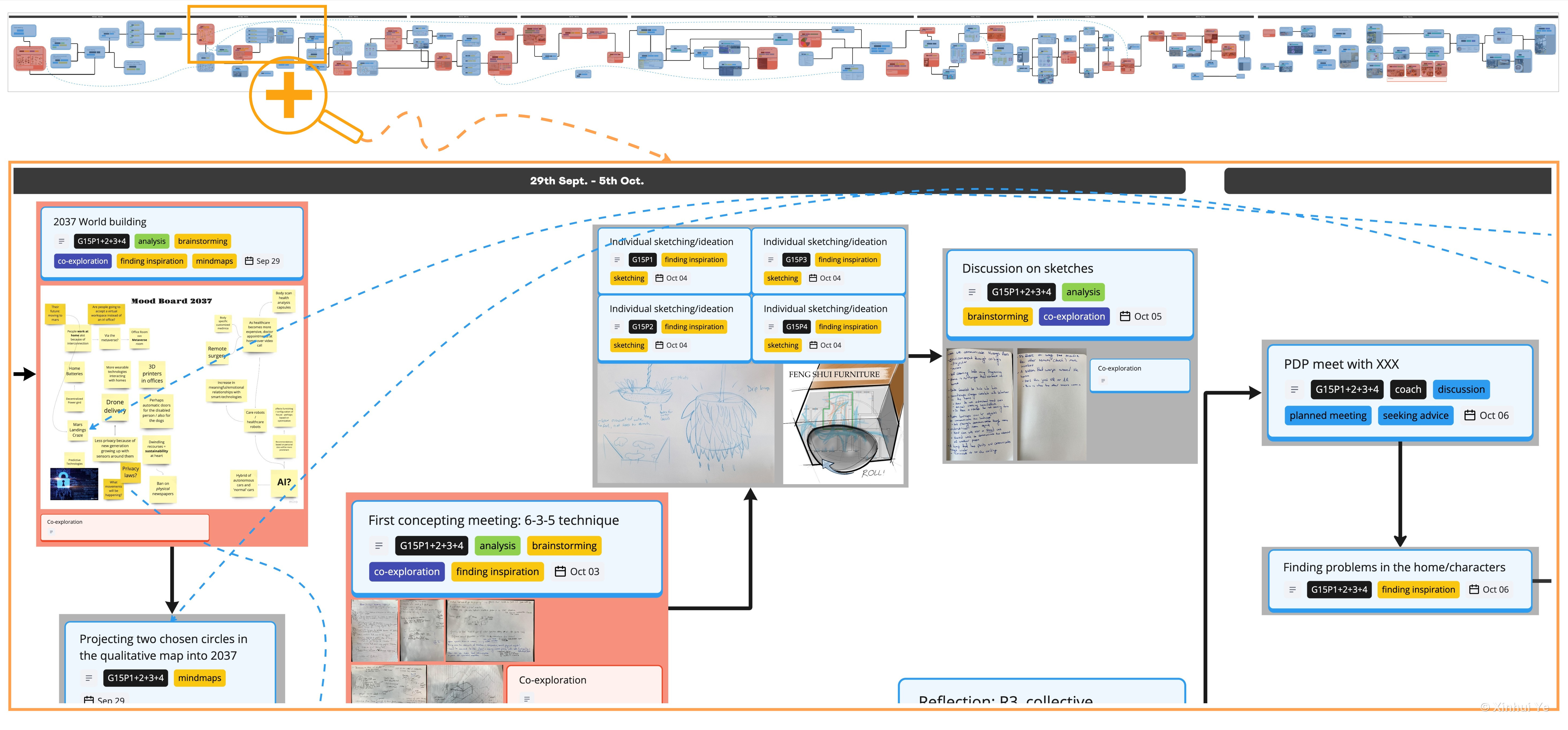
Once the diary was complete, I conducted a semi structured group interview, prompting participants to walk through their entries, elaborate on details, and reflect on the week's activities. The diary board was continuous. Each week, teams could start a new board from templates for documenting activities, while revisiting earlier entries and linking related ones. This structure, shown here, offered a clear view of the whole design process.
Group reflection
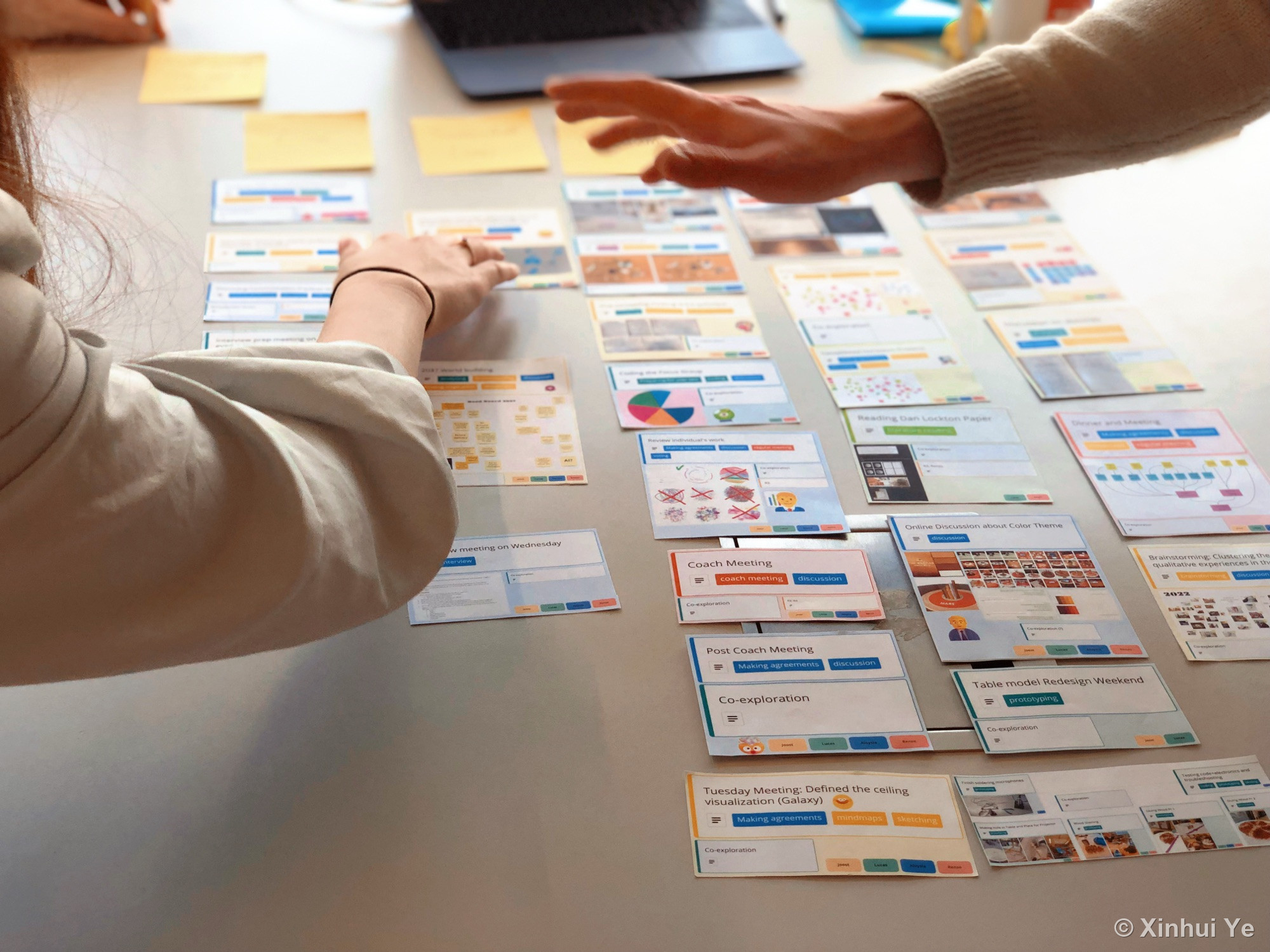
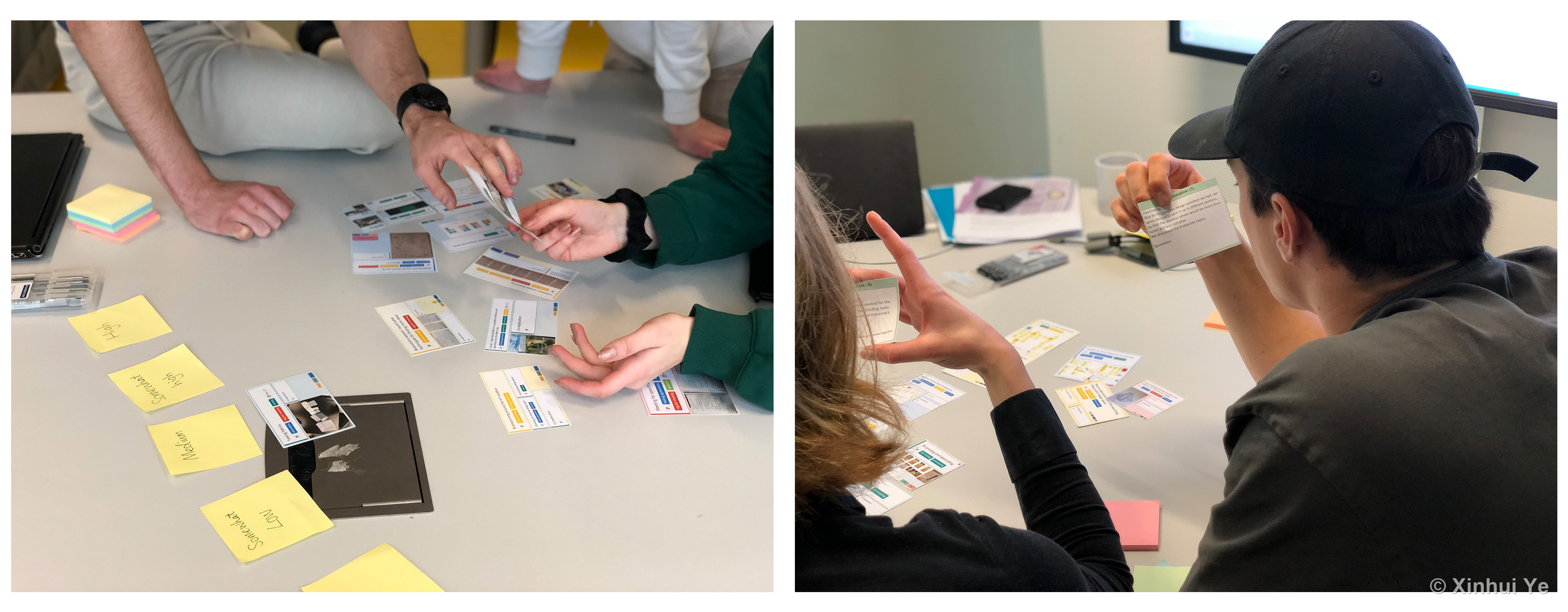
At the end of the project, I held a group reflection session. I transformed the digital descriptions of co-exploration activities from the interviews into physical cards. Each card showed diary content on the front as a tangible representation of a design activity, with key points and quotes on the back to prompt recall. This hands-on interaction refreshed memories and deepened understanding, laying the foundation for the interview questions
What people are saying
"What the authors learned offers ideas and insights that can be applied to working designers in professional practice. This work revealed five distinct patterns of co-exploration activities. It also provides actionable insights for use by professional designers as well as by design educators."
"It was overwhelmingly positive and I looked forward to every 'Xinhui' meeting. I am sure my group feels the same. We reflected weekly on our design process and were able to become better group members and even friends. Thank you!"
Master student · Team 9Studio 2
"This study has helped tremendously by tracking all the experiences we went through for the design process. This has allowed me to become actively aware of the things that work for me in terms of ideating and connecting. Overall I am glad this study took place, because it has provided me with tangible evidence of the process, that has been, and will be very useful in the future."
Bachelor student · Team 15Studio 1
"I really enjoyed this study, it was very insightful and helpful to have weekly reflection and documentation. It was a very pleasant and fun experience."
Bachelor student · Team 4Studio 1
"Xinhui was always lovely throughout the entire process, I did not feel pressured or judged anytime. As a result, the entire experience was very lovely to be a part of. It also helped a lot to the team to revise who did what, how much of a progress was made every week. Thank you for everything!"
Master student · Team 11Studio 2
"This study was very well designed with the boxes we had to fill in every week. The final meeting was amazing with all specific cards for every single group, it was very easy to remember the past activities and reflect on them."
Master student · Team 7Studio 1
"In an educational perspective, the weekly session of reflection was more effective than the regular discussions with the coaches. I would love to discuss my weekly process with other coaches using the miro scheme to make things more clear."
Bachelor student · Team 2Studio 2
|
Analytical Framework
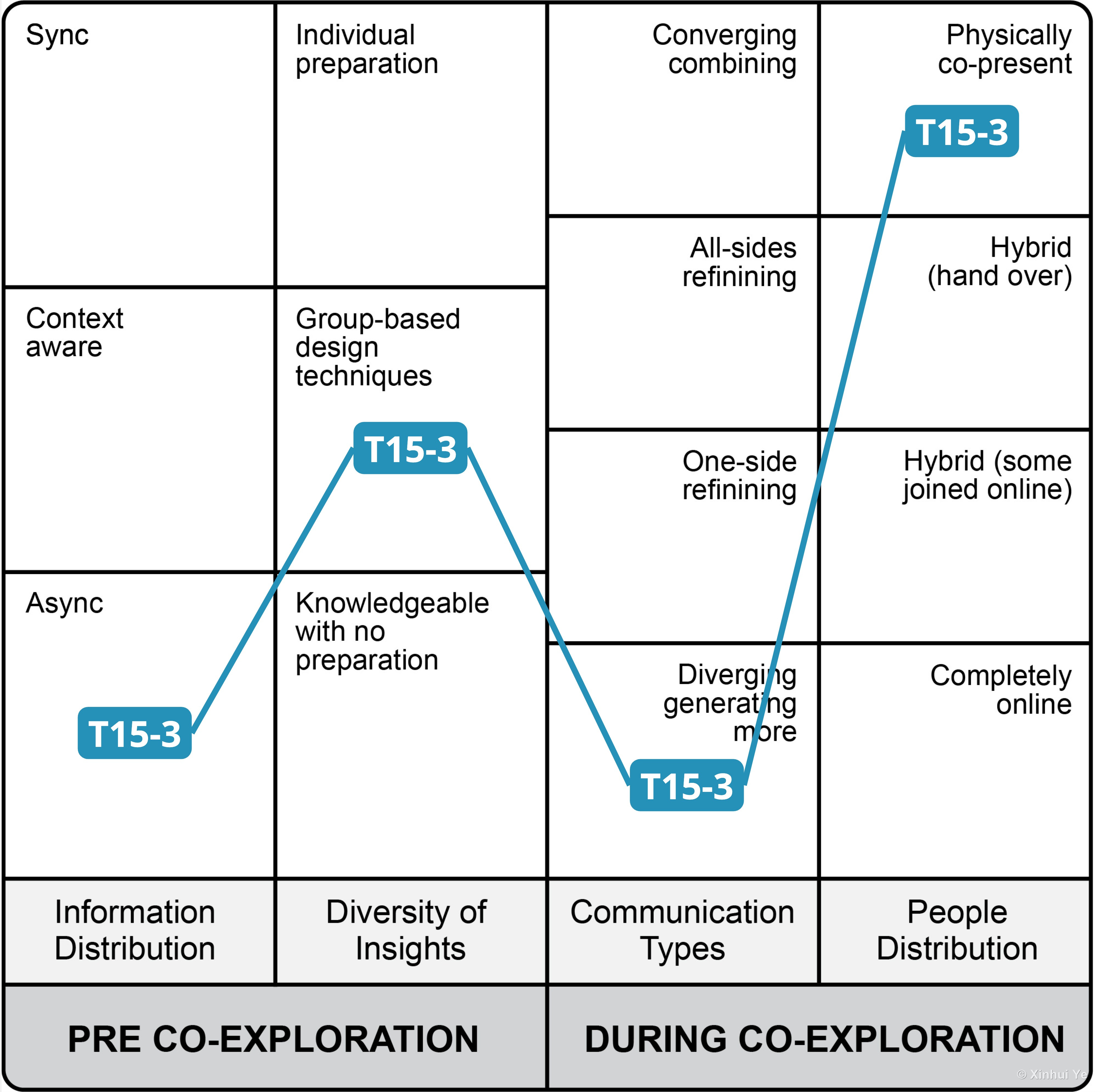
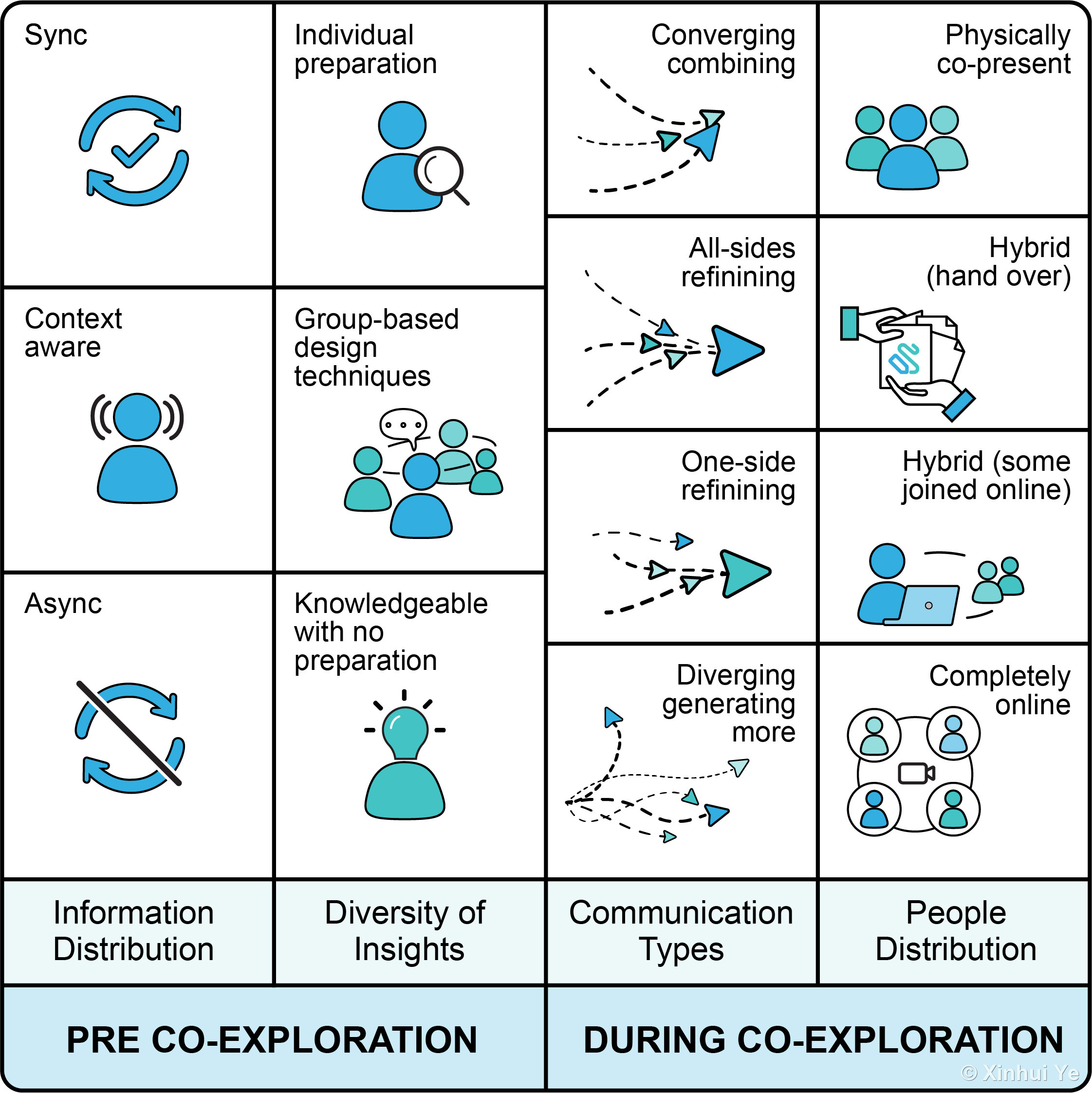
Co-exploration mapped across four dimensions: information distribution, diversity of insights, communication types, and people distribution.
Information distribution: was information shared before the activity? Fully synced, partially overlapping, or not at all
Diversity of insights: where did ideas come from? Prepared individually, generated through a group technique, or drawn from existing shared knowledge
Communication types: what kind of exchange took place? Generating more ideas, refining together, refining one person's idea, or combining into something new
People distribution: how were participants arranged? All in the same room, hybrid in some form, or fully online
Reading one team
Take a brainstorming session using the 6-3-5 technique as example:
no prior sharing → async
ideas generated through a structured group method → group-based design technique
passed around and built upon → generating more
everyone in the room → co-present
One line on the framework, shown here.
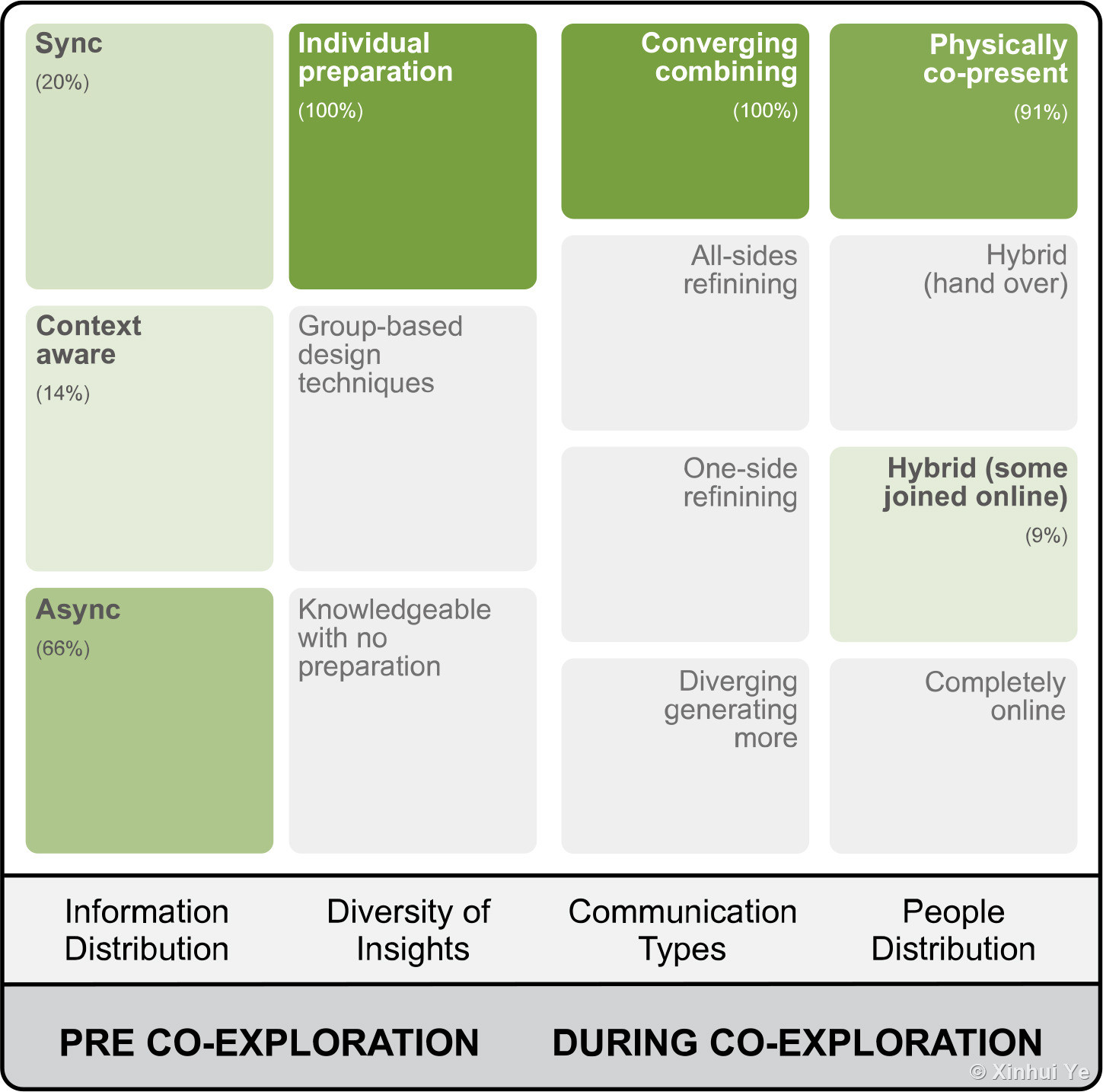
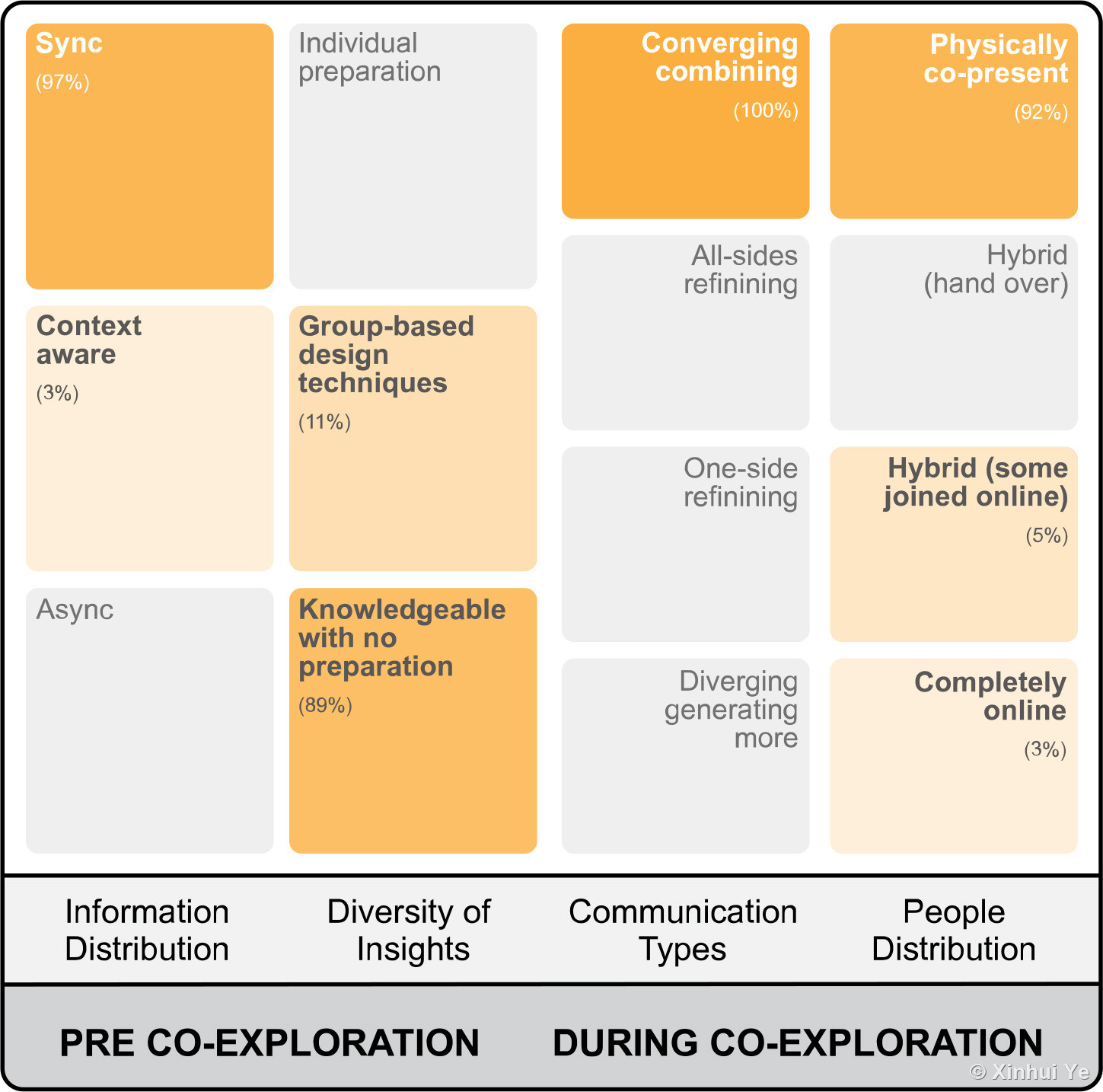
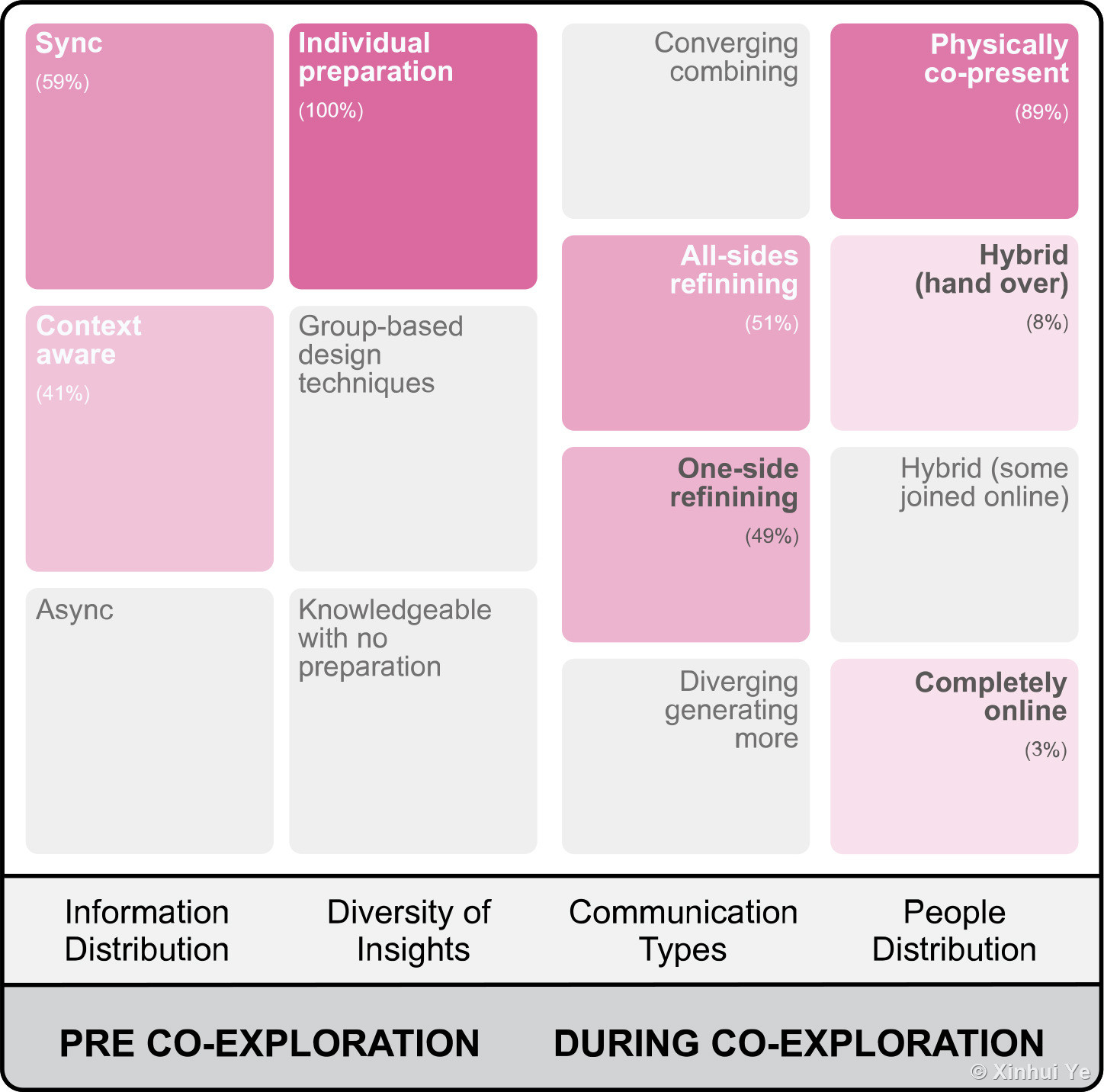
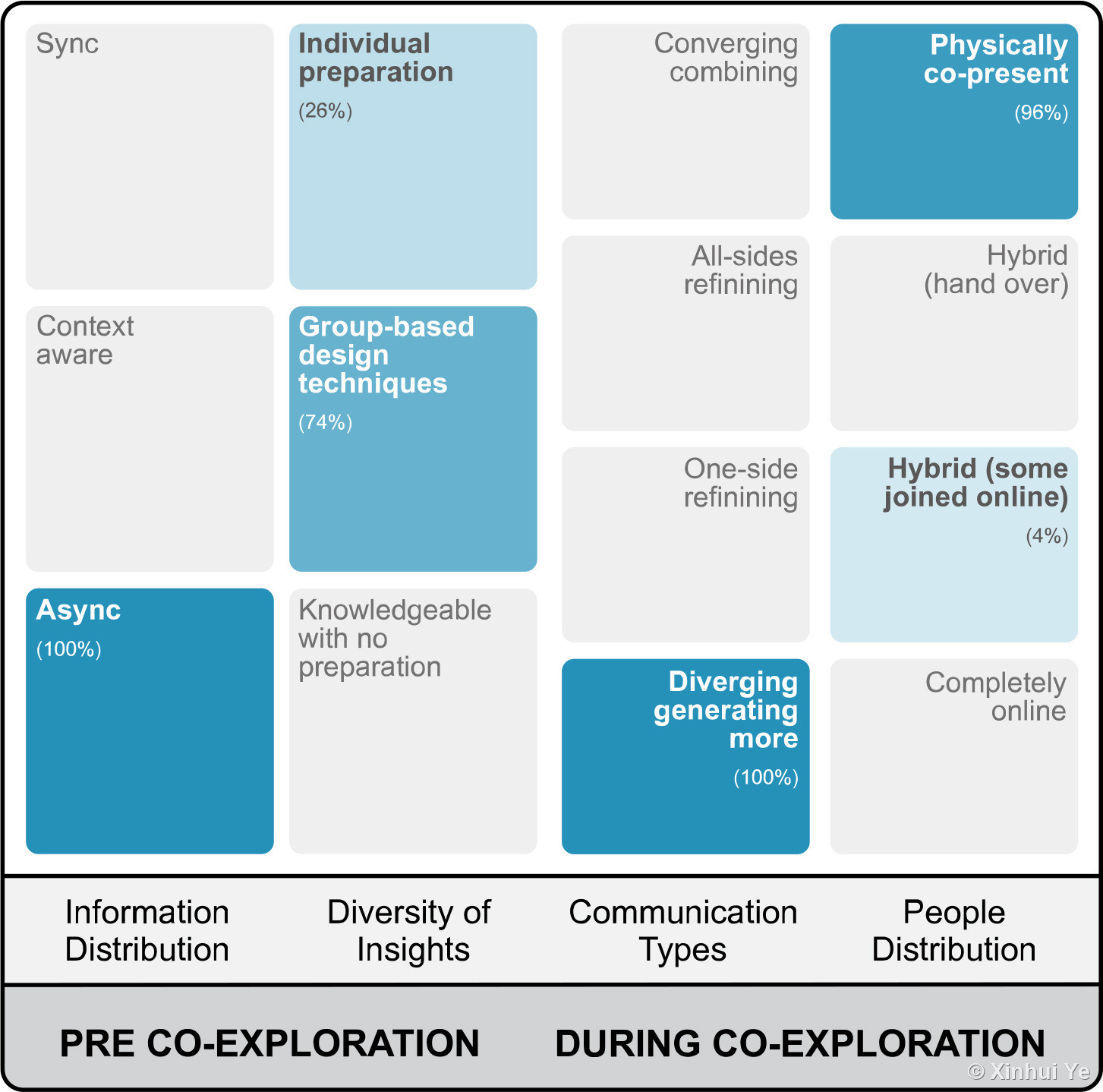
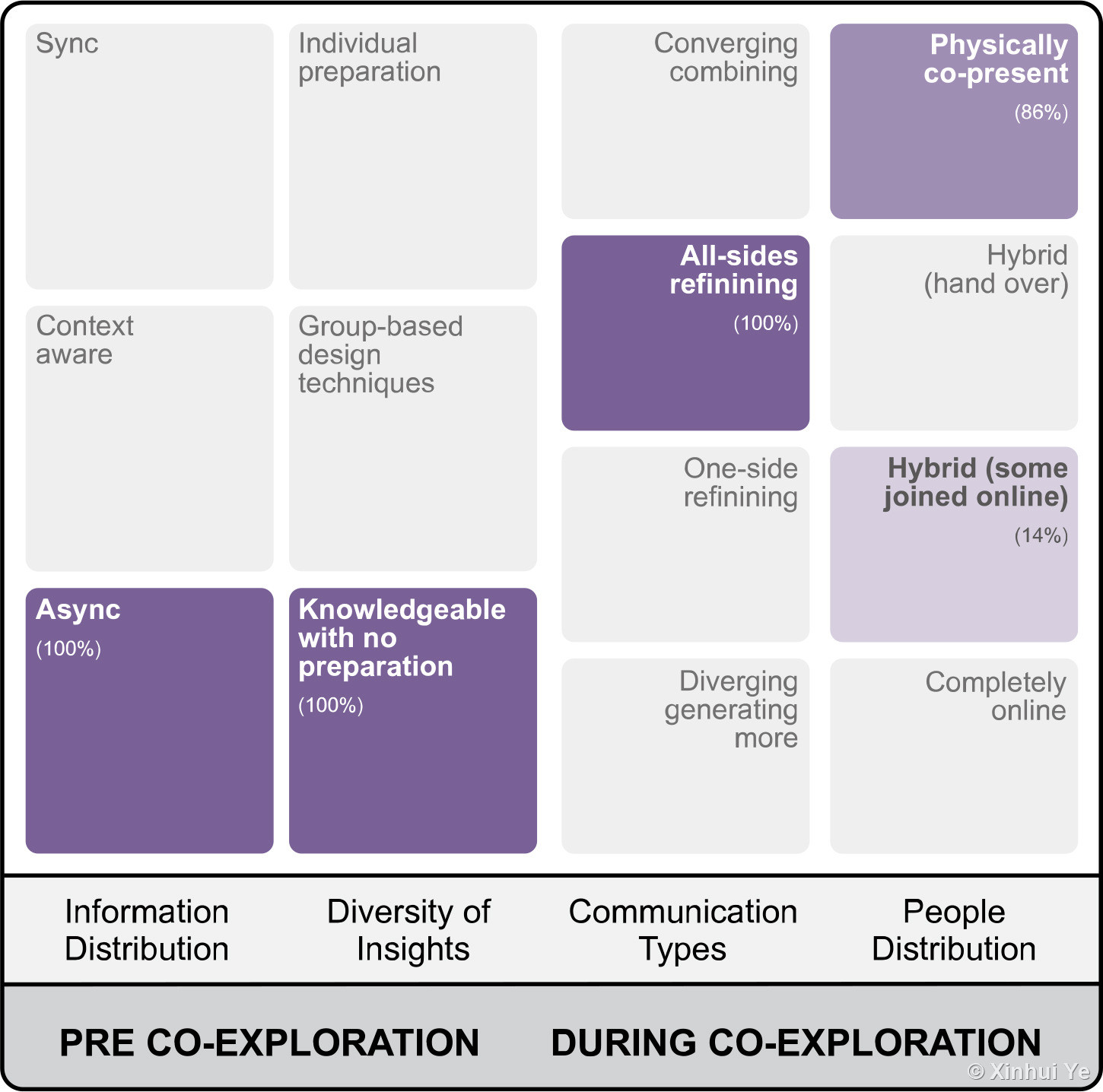
The study generated a substantial dataset from the weekly diary interviews: 1,562 documented activities and over 78 hours of audio material. Of these, 161 activities across 16 teams were tagged as co-exploration, with participants explaining their reasoning. I maped these activities across their dimensions and values, revealing five distinct patterns across all groups. To comprehensively illustrate these patterns, I used heatmaps, with cell colors indicating the frequency of cases associated with each value.
Merging different insights.
Everyone arrives with something prepared, ideas developed separately that now need to become one. The conversation is about combining, voting, deciding. It happens across the whole design process, and teams consistently describe it as a turning point.
Reflecting on existing materials.
This pattern tends to surface at moments of ambiguity, when something isn’t working and the team needs to figure out why. They revisit what they have, talk it through openly, and come out with a clearer shared understanding of where they are and where to go next.
Refining initial concepts.
Teams come in with something already on the table, a sketch, a prototype, a direction, and work on it together. Sometimes that means the whole group refining collectively, sometimes it means one person’s idea getting sharpened through others’ input, often triggered by outside perspectives from coaches or users.
Generating more ideas.
This pattern appears mostly early in the project, when nothing is fixed yet. Teams use structured techniques to deliberately expand what’s possible, building on each other’s contributions in real time. The energy is exploratory, with no expectation of landing anywhere specific.
Seeking cooperation.
This pattern is almost always spontaneous, arising when teams working on related challenges find themselves in the same space. There is no agenda going in, but the conversation opens up opportunities that neither team had seen on their own.
Thriving vs struggling teams
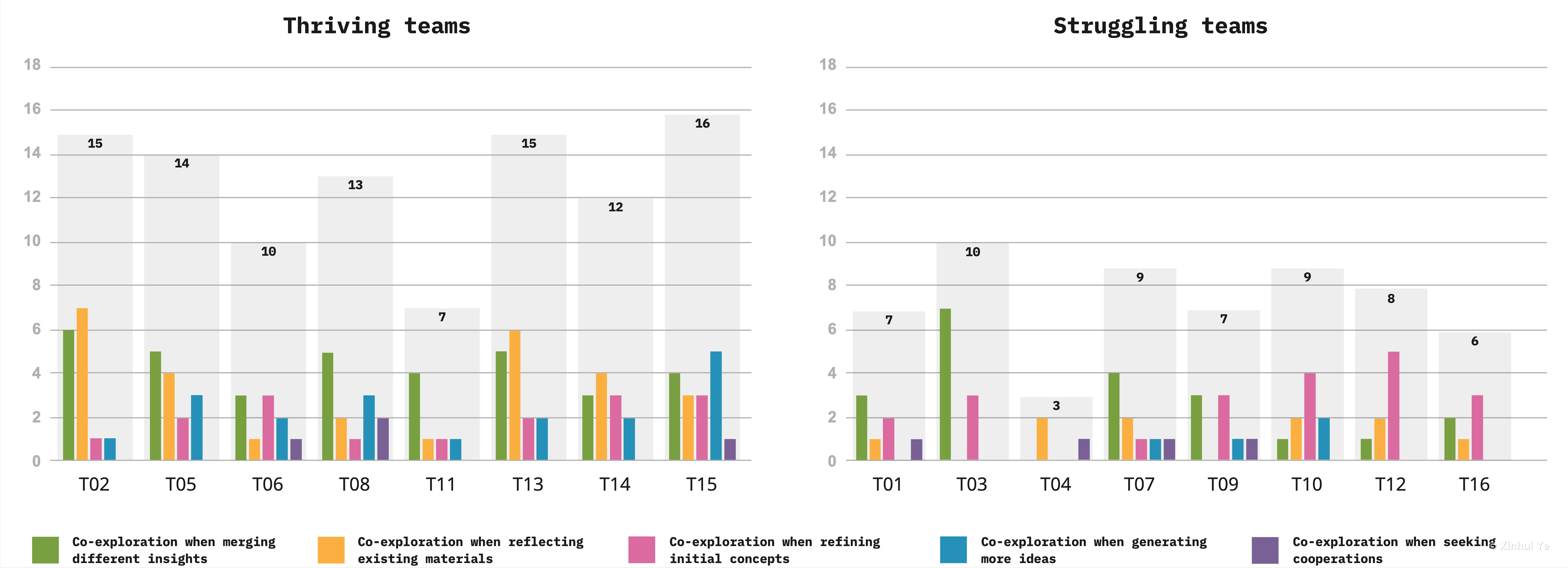
Drawing on final assessments and my own observations, I grouped teams into thriving and struggling. The chart here shows the frequency and diversity of co-exploration activities for both groups. The grey bar represents overall frequency, while the colored segments map to the five patterns identified earlier. The contrast is visible at a glance, and the statistical analysis confirmed it. Thriving teams co-explored more often and across a wider range of patterns. Struggling teams did less of both. Design outcomes are shaped by many things, but the data points to co-exploration as a contributing factor worth taking seriously, and one that warrants further investigation.
Co-exploration is an experience, not an activity. There’s no recipe, but we can shape the conditions for it to emerge.
Co-exploration is not a phase you pass through at the start of a project, it runs through the whole process. What makes it co-explorative is not the activity itself, but the quality of engagement within it. The same brainstorm can be co-exploration in one team and just a meeting in another, depending on how people show up for each other.
That shared experience, more than any individual contribution, is where collective creativity lives. The teams that co-explored more often, and in more varied ways, were the teams that thrived. And the teams that struggled tended to do less of it, and in fewer forms. That finding, backed by five months of data across sixteen teams, is hard to ignore.
To me, it makes co-exploration worth designing for, and worth protecting, especially when teams are working apart.